Tazoudasaurus: The Ancient Dragon of Imghrane
The discovery of Tazoudasaurus naimi - a 180-million-year-old dinosaur found in the village of Tazouda, Ait Zaghar, Ouarzazate — one of the oldest and best-preserved sauropod skeletons ever found
Tazoudasaurus: The Ancient Dragon of Imghrane
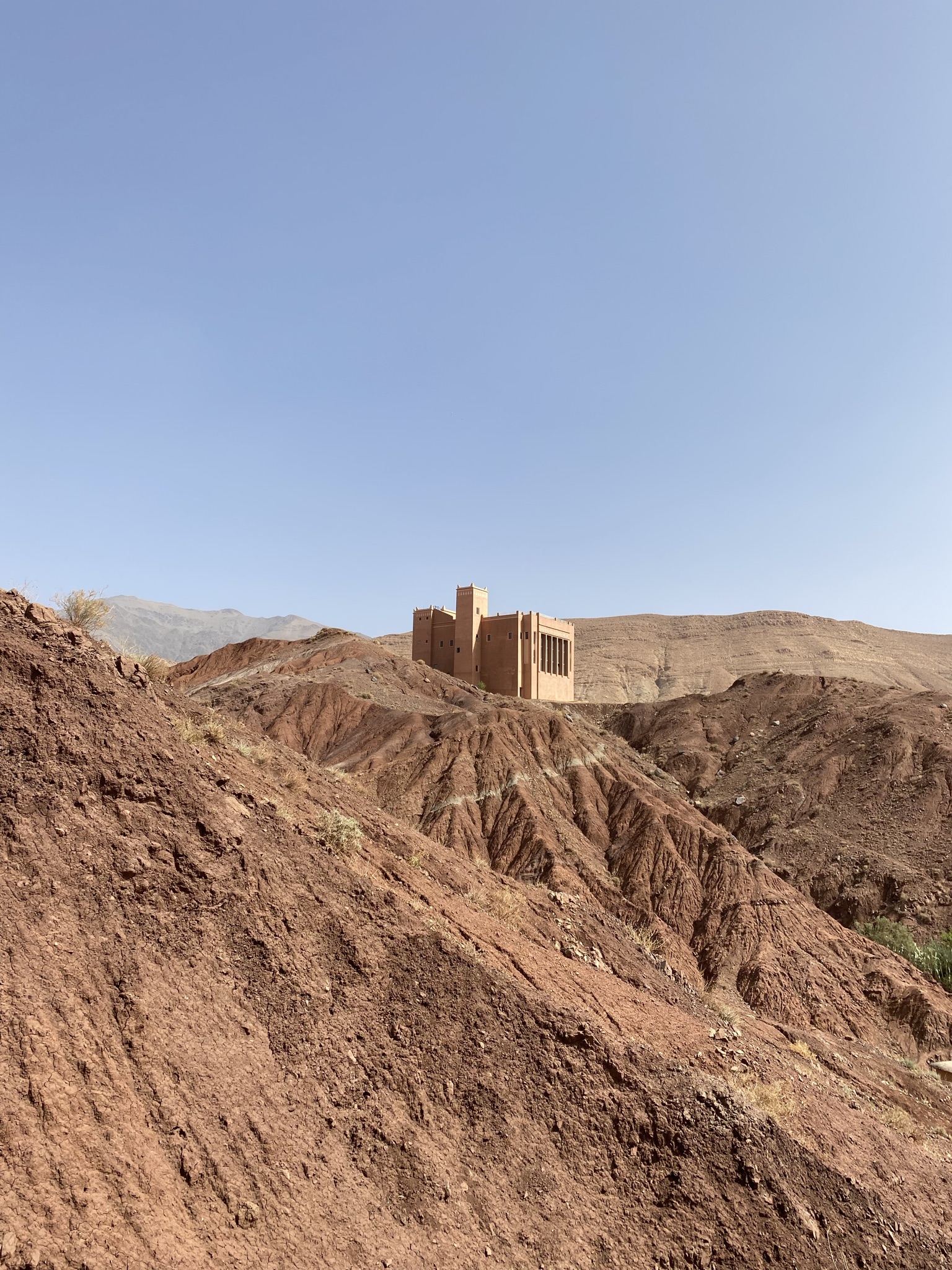
🦴 The Discovery That Shook Paleontology
In 1998, fossil remains of a herbivorous dinosaur were uncovered in the small village of Tazouda (ⵜⴰⵣⵓⴹⴰ), nestled within the Ait Zaghar tribe of the Imghrane region. This was no ordinary find — preliminary studies revealed that the fossil fragments were among the oldest ever discovered for the four-legged herbivorous dinosaurs known as Sauropoda.
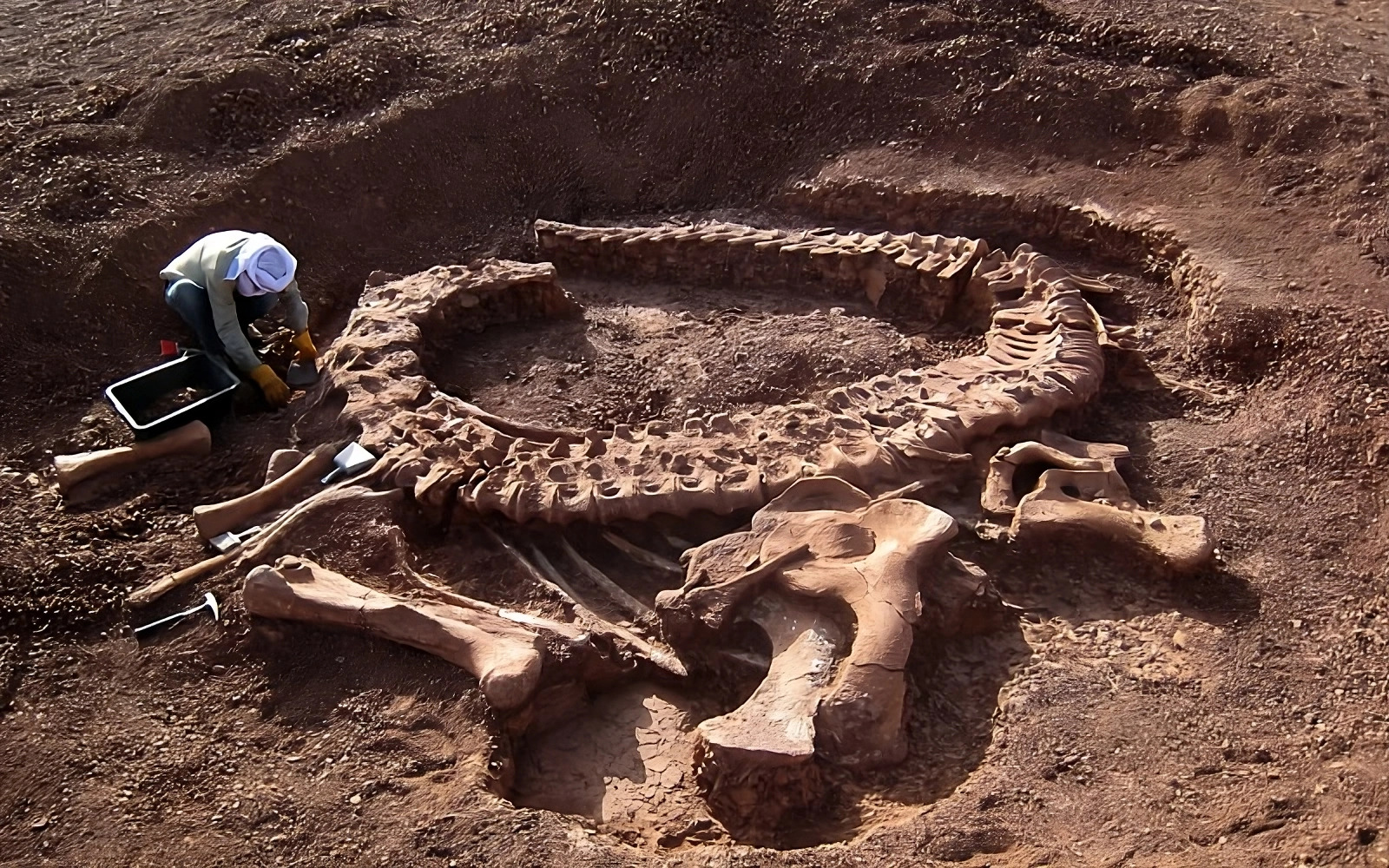
What followed was a monumental scientific effort. The excavation required seven full years to extract over 600 individual fossil pieces — a painstaking process that would ultimately reveal one of the most complete Early Jurassic sauropod skeletons ever found on Earth.
🔬 Seven Years of Meticulous Excavation
The excavation and study of the fossils was led by Professor Ronan Allain from the National Museum of Natural History (Muséum national d’histoire naturelle) in Paris, France, alongside a joint team of French and Moroccan researchers.
The work grew out of a 1999 exhibition in Paris, Maroc, Mémoire de la Terre (“Morocco, Memory of the Earth”), which inspired the Dinoatlas Project — a campaign of fresh fieldwork in the Jurassic rocks of the High Atlas. That effort led to the animal being formally named in 2004, and in 2008 a 400-page scientific monograph laid out its complete anatomy bone by bone.
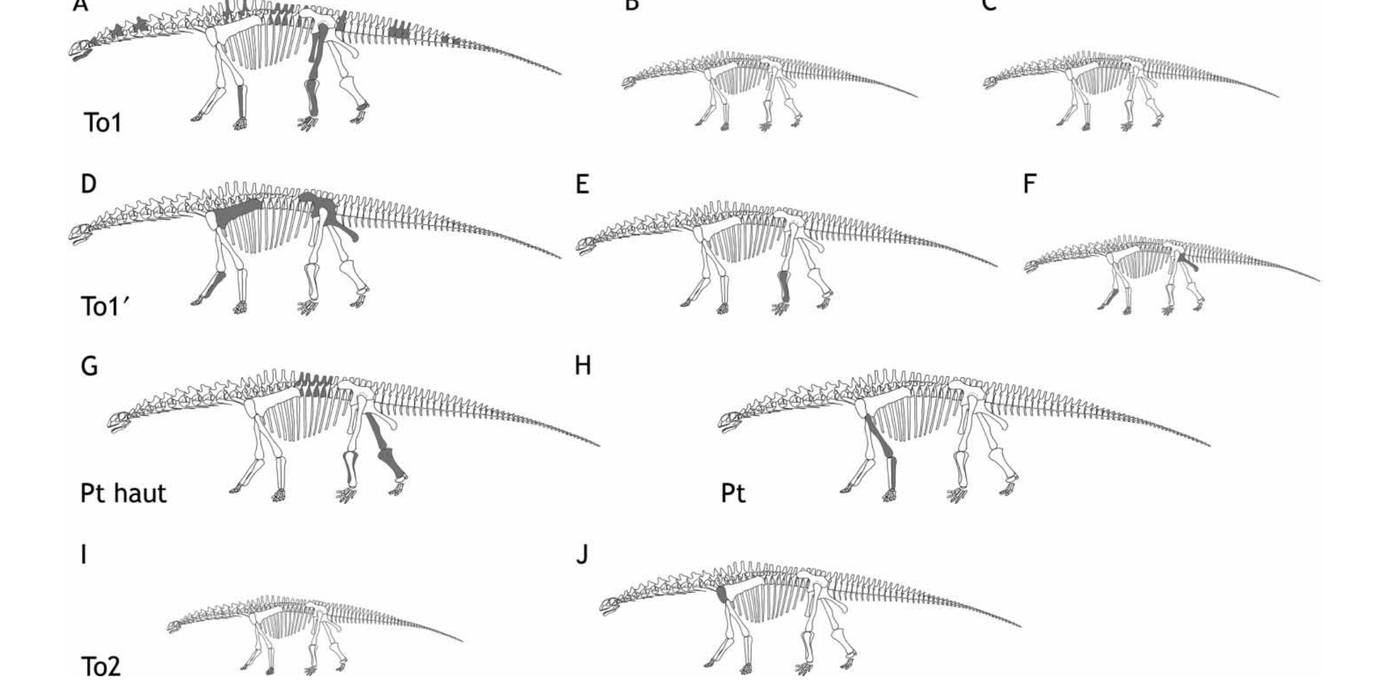
The bones did not come from a single skeleton, but from a whole cluster of fossil sites scattered across the hills above Tazouda. Researchers named them — from south to north — O, To1, To1′, Pt, R and To2, each yielding a different mix of juvenile, subadult and adult animals.
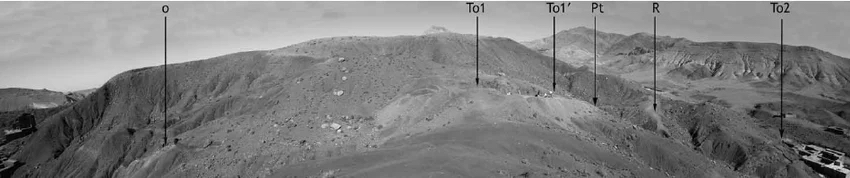
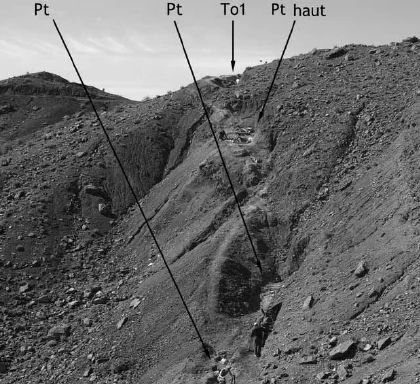
The team worked with extraordinary precision, using tools ranging from pickaxes for removing rock layers down to dental instruments for the most delicate bone extractions. Every piece was carefully catalogued with its exact position recorded, building a three-dimensional map of the fossil deposit.
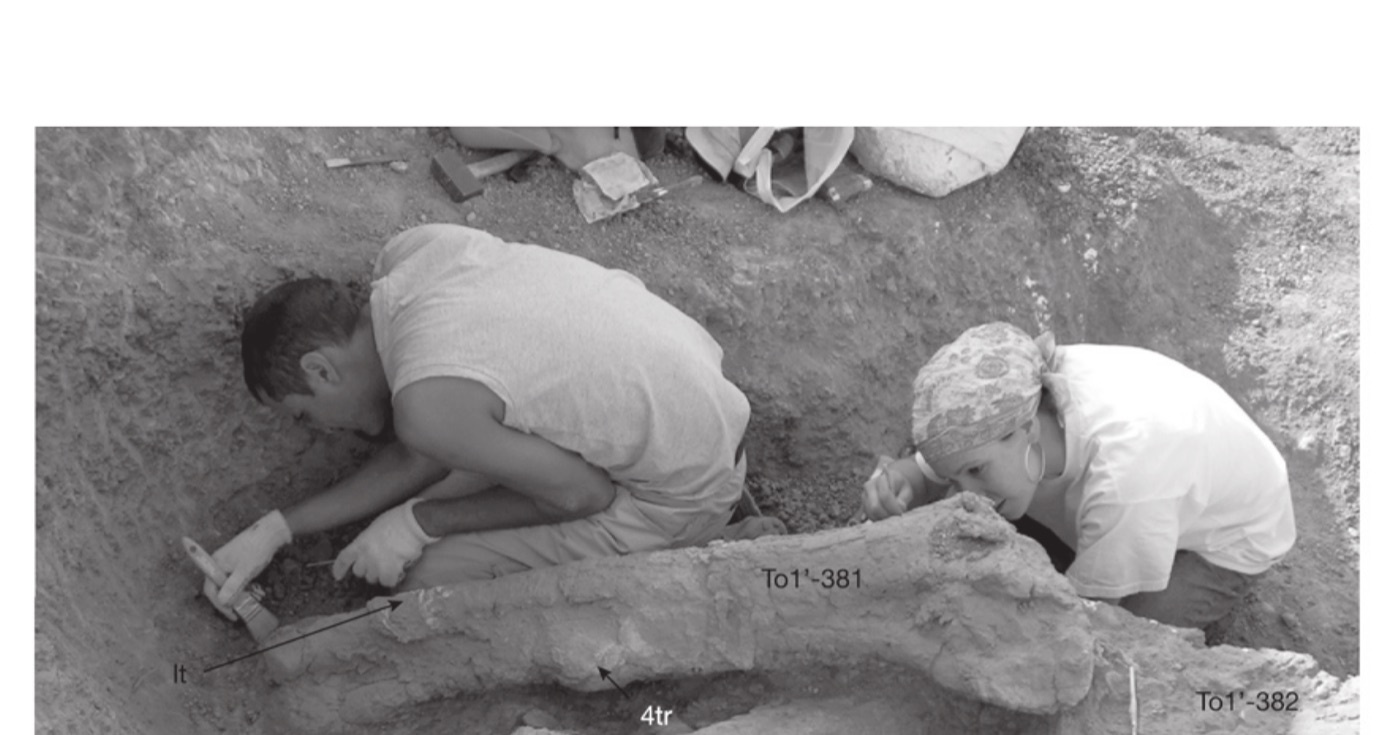
The result was a breakthrough: scientists were able to uncover the precise biological anatomy and skeletal structure of the discovered dinosaur. Missing parts were then reconstructed through advanced computer simulation programs, allowing researchers to visualize the complete animal for the first time in 180 million years.
🦕 Reconstructing the Skeleton
Drawing on more than 600 bones from at least ten individuals, the scientists were able to publish a complete skeletal reconstruction of the animal — the first ever for its family. Except for a fully articulated skull, virtually every part of the skeleton is now known.
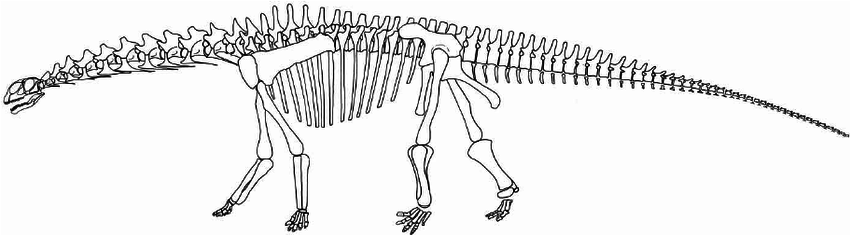
The painstaking work of assembling over 600 fossil fragments yielded remarkable results. The skeleton revealed a medium-sized sauropod with distinctive features that set it apart from later, more evolved species.
Physical Characteristics
- Length: Approximately 9.5–10 meters (~31–33 feet) as an adult
- Weight: Around 8 metric tons for a fully grown adult — while a juvenile, with a femur of just 29 cm, weighed only about 140 kg
- Age: ~180 million years old (late Early Jurassic, Toarcian to Early Aalenian)
- Diet: Herbivore — a plant-eater with specialized teeth
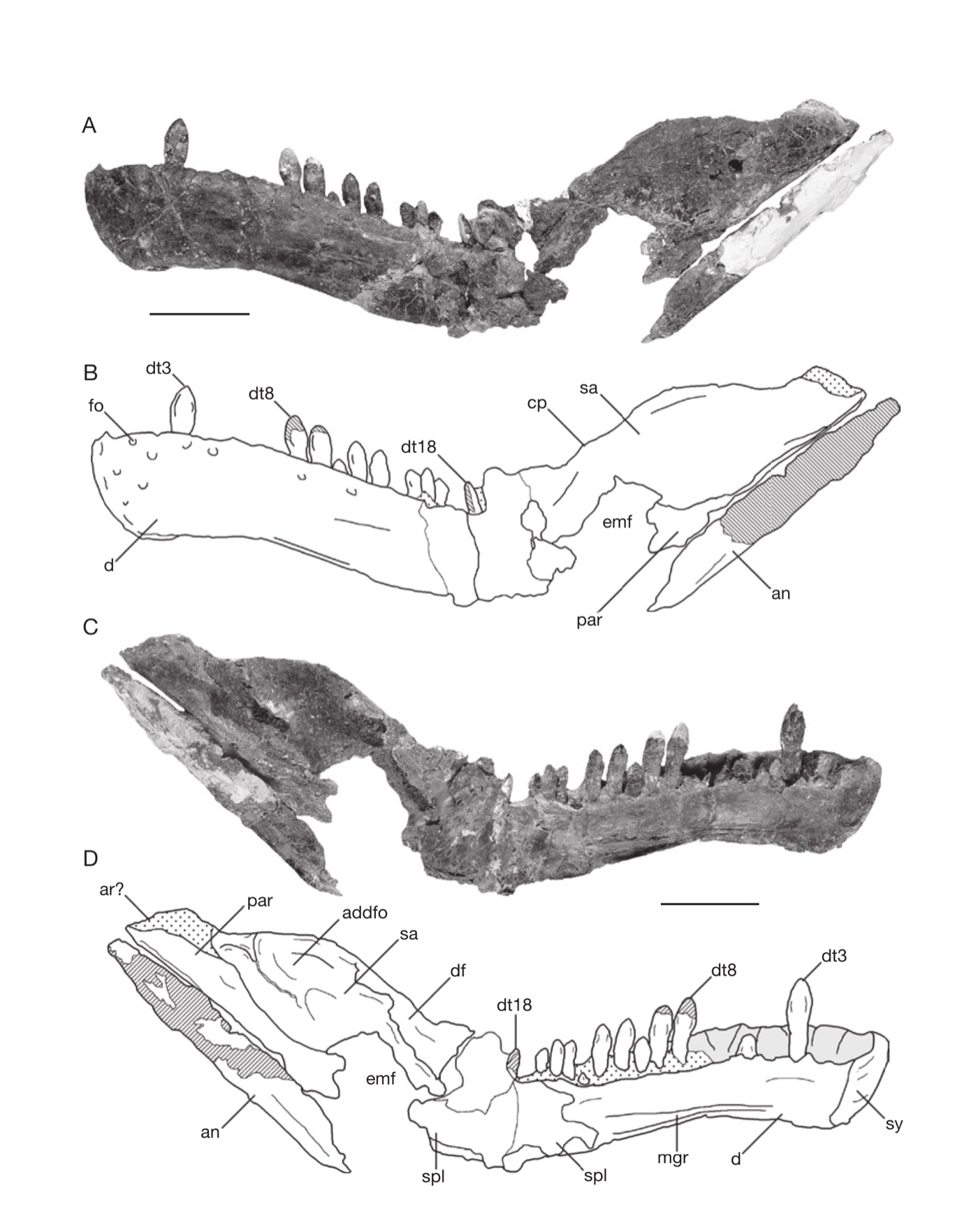
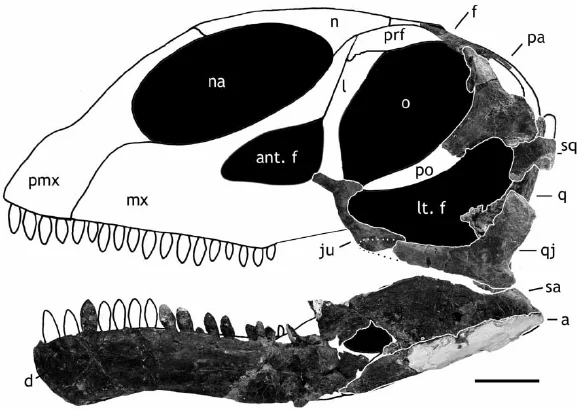
- Skull: Reconstructed at about 32 cm long, with a lower jaw bearing 18 teeth edged with small conical denticles
- Body plan: A neck of 12 vertebrae, a back of 13 dorsal vertebrae, and a long tail estimated at 4.4–4.9 m; the forelimbs measured roughly 90% the length of the hindlimbs
The dinosaur was formally named Tazoudasaurus naimi — its genus name honoring the village of Tazouda where it was found, and its species name “naimi” meaning “slender” or “elegant” in Arabic.
The Skull — A Rare Prize
For a sauropod, a preserved skull is a rare prize: cranial material from early sauropods is scarce and almost always crushed. Tazoudasaurus is a striking exception. Its skull has been reconstructed at about 32 cm long, combining the bones actually recovered at Tazouda with elements restored after close relatives such as Shunosaurus and Abrosaurus.
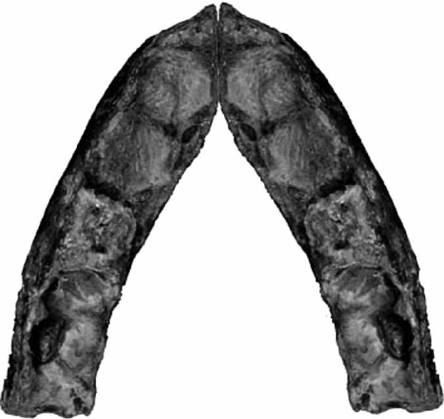
One of its most distinctive features lies in the jaw: the right and left halves of the lower jaw met at the front in a narrow V-shape, rather than the broad, rounded arch seen in later sauropods — a clue to just how primitive this animal was.
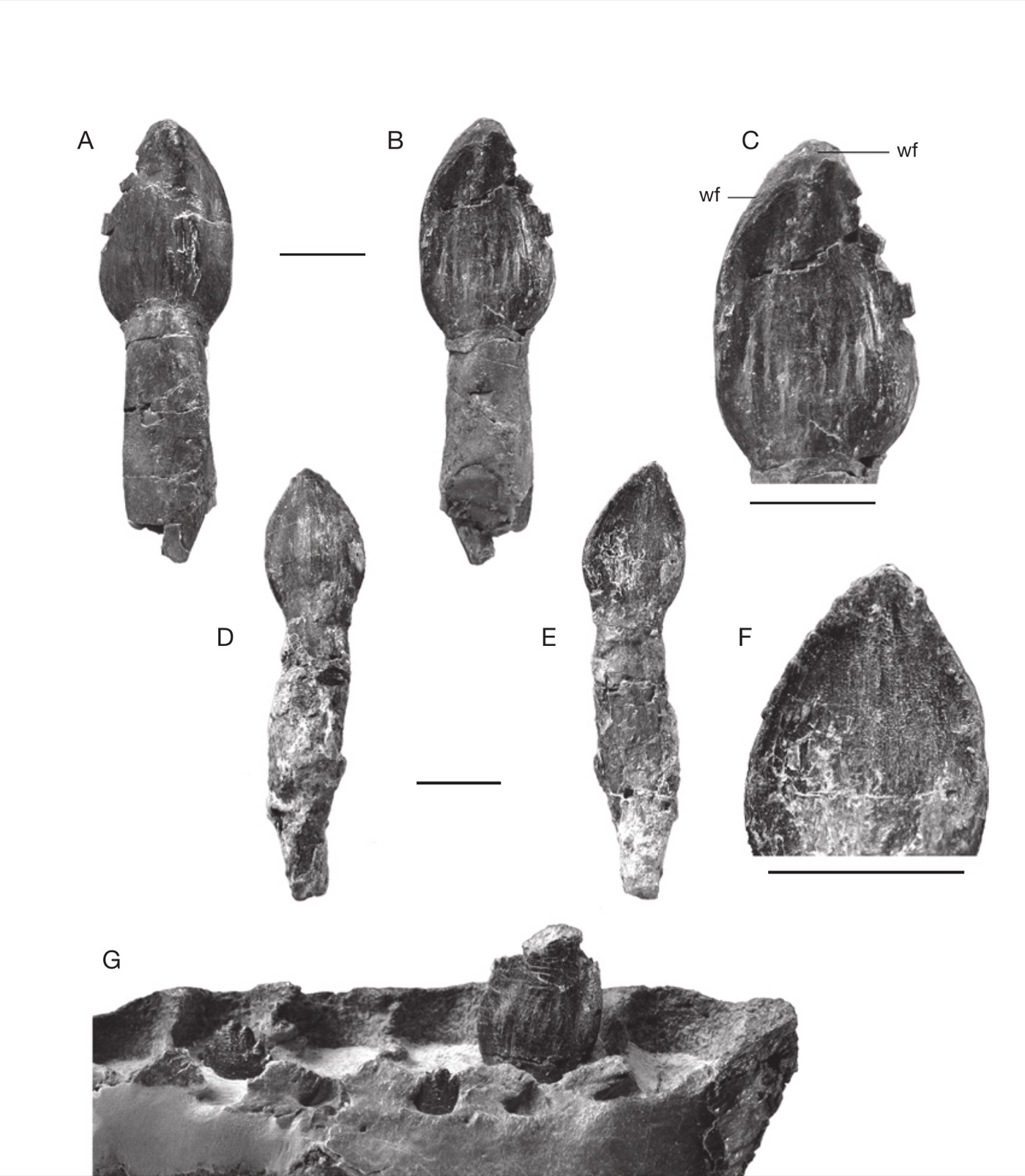
The teeth that lined these jaws were spoon-shaped (spatulate) and edged with tiny denticles. Many of them carry distinct wear facets — polished surfaces worn where upper and lower teeth scraped past one another while stripping and crushing vegetation, a direct record of how this early sauropod fed.
What the Bones Reveal
Because nearly the entire skeleton is now known, Tazoudasaurus offers a detailed window into how the very first sauropods were built:
- A horizontal neck. The twelve spool-shaped neck vertebrae suggest the head was carried at or below shoulder height, rather than raised high like the giant sauropods that came later.
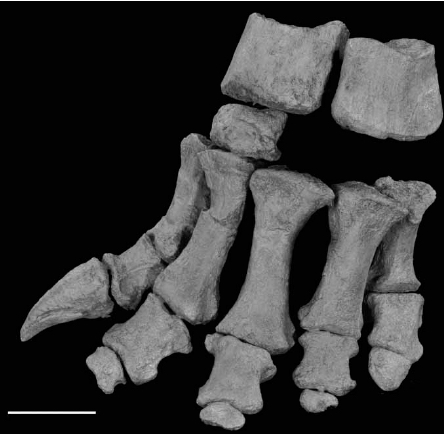
- A transitional hand. A rare complete, articulated hand was recovered — its bones spread in a half-arch and held off the ground at about 45°, tipped by a large, recurved thumb claw. This “sub-unguligrade” posture sits halfway between the flat-footed prosauropods and the pillar-like hands of later sauropods, and the hand kept a high finger-bone count (a phalangeal formula of 2-3-2-2-2 — more than any other known sauropod).
- An unfused shoulder. Even in adults, the shoulder blade (scapula) never fused to the coracoid — another primitive feature retained from its ancestors.
👥 The Research Team
The discovery and study of Tazoudasaurus was the result of a remarkable international collaboration:
- Dr. Ronan Allain (France) — Lead paleontologist from the National Museum of Natural History, Paris; formally named and described Tazoudasaurus
- Dr. Najat Aquesbi (Morocco) — Moroccan paleontologist and project co-leader
- Dr. Philippe Taquet (France) — Eminent paleontologist and mentor of the research program
- Dr. Dale Russell (USA) — Paleontologist contributing to taxonomic classification
- Dr. Michel Monbaron (Switzerland) — Geologist who helped interpret the ancient environment
- Dr. Christian Meyer (Switzerland) — Specialist in dinosaur tracks and trace fossils
🏆 Why Tazoudasaurus Matters
The scientific significance of this discovery cannot be overstated. Tazoudasaurus naimi is one of only five known sauropod species from the Early Jurassic period worldwide — and it is the best preserved of them all in terms of anatomical detail.
This exceptional preservation enabled scientists to conduct detailed studies of:
- Biological anatomy (Anatomy) — understanding the precise body structure of early sauropods
- Evolutionary relationships (Phylogenetics) — tracing the evolutionary links between different dinosaur species and understanding how sauropods evolved from smaller ancestors into the largest land animals that ever lived
The fossils include skull elements, vertebrae, limb bones, and ribs from at least ten individuals — juveniles, subadults, and adults — recovered from several neighbouring bone beds. This gathering of animals of every age hints that Tazoudasaurus may have lived in herds.
Tazoudasaurus belongs to the Vulcanodontidae, one of the most primitive branches of the sauropod family tree (a basal group of Gravisauria). Until its discovery, this family was known almost entirely from the fragmentary Vulcanodon of Zimbabwe — and never from a skull. Tazoudasaurus is the first vulcanodontid complete enough to be reconstructed as a whole animal, which is exactly why it matters so much for understanding how the colossal sauropods first evolved.
🌿 The Ancient Environment
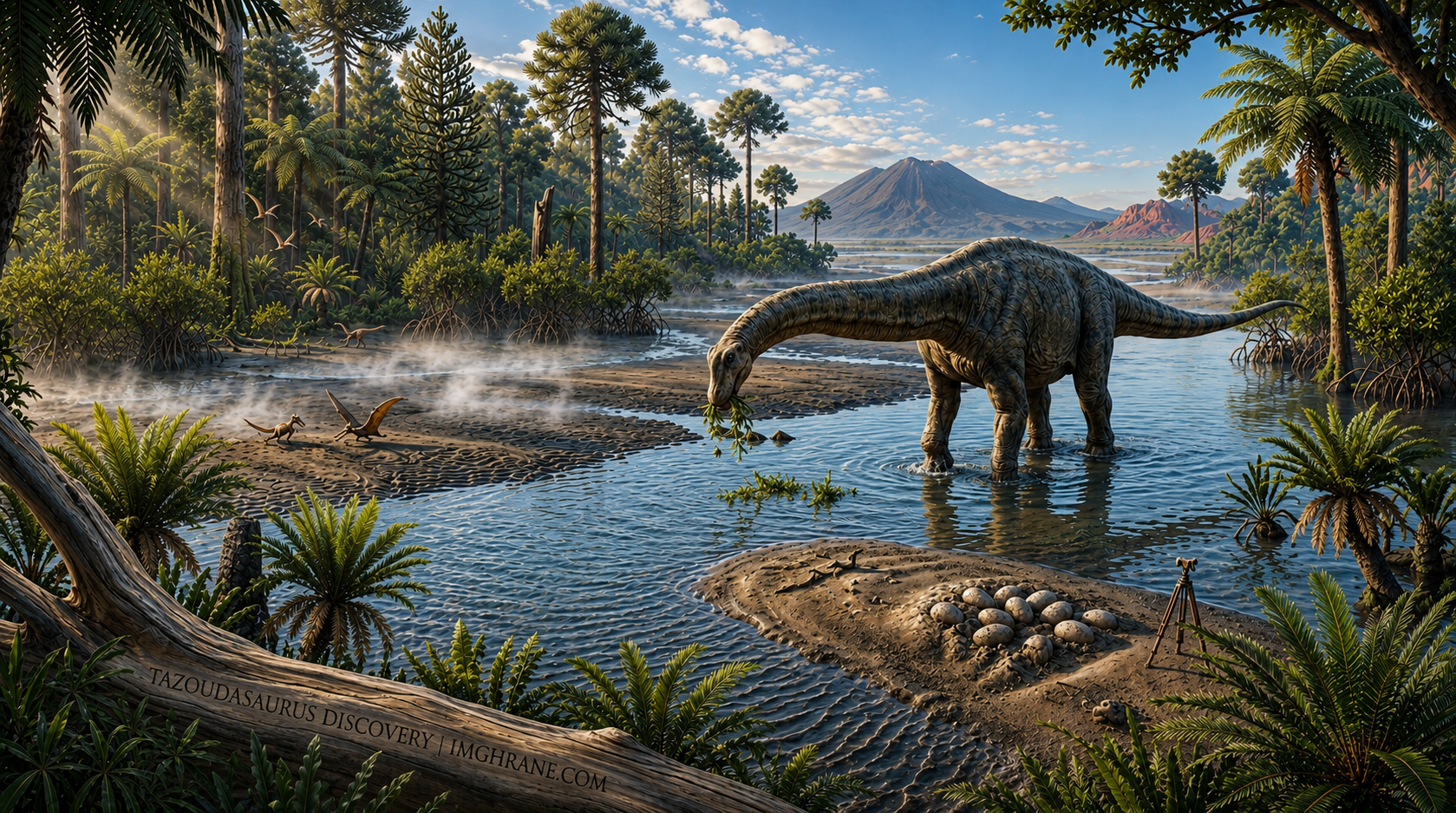
180 million years ago, the Ait Zaghar region looked nothing like the arid landscape of today. During the Early Jurassic, this area featured:
- A warm, humid tropical climate
- River floodplains with meandering waterways
- Lush vegetation including giant ferns, cycads, and primitive conifers
- A rich ecosystem supporting both herbivores and predators
Tazoudasaurus shared its world with Berberosaurus liassicus, a carnivorous theropod (a basal abelisauroid) whose bones were found in the very same bone-bed. It is quite possible that Tazoudasaurus was among this predator’s prey — making Ait Zaghar a uniquely important site for understanding Jurassic ecosystems in North Africa.
👩🔬 Dr. Najat Aquesbi
Dr. Najat Aquesbi, born in Marrakech, studied paleontology in Paris and became the head of Morocco’s Geological Museum. She was awarded the prestigious Wissam Alaoui by King Mohammed VI for her outstanding contributions to Moroccan science. Her leadership was instrumental in the Tazoudasaurus project and in establishing Morocco as an important center for paleontological research.
🏛️ The Museum & Route of the Dinosaurs
Following the discovery, plans were developed for a dinosaur museum at Tazouda as part of Morocco’s ambitious “Route of the Dinosaurs” (Route des Dinosaures) tourist circuit. Construction began in 2009, aiming to create a destination where visitors could learn about the region’s extraordinary prehistoric heritage.
🗺️ Visiting the Sites
The fossil sites are located on Tazouda Hill in the Ait Zaghar region, approximately 65 kilometers from Ouarzazate. Visitors can:
- Explore the original excavation sites where the 600+ fossil pieces were extracted
- See the striking red rock formations of the Azilal Formation — the geological layer that preserved these ancient bones
- Arrange guided tours through local guides who share the story of the discovery
- Visit the nearby areas of Toundoute and the broader Imghrane region
🦴 The Geological Evidence
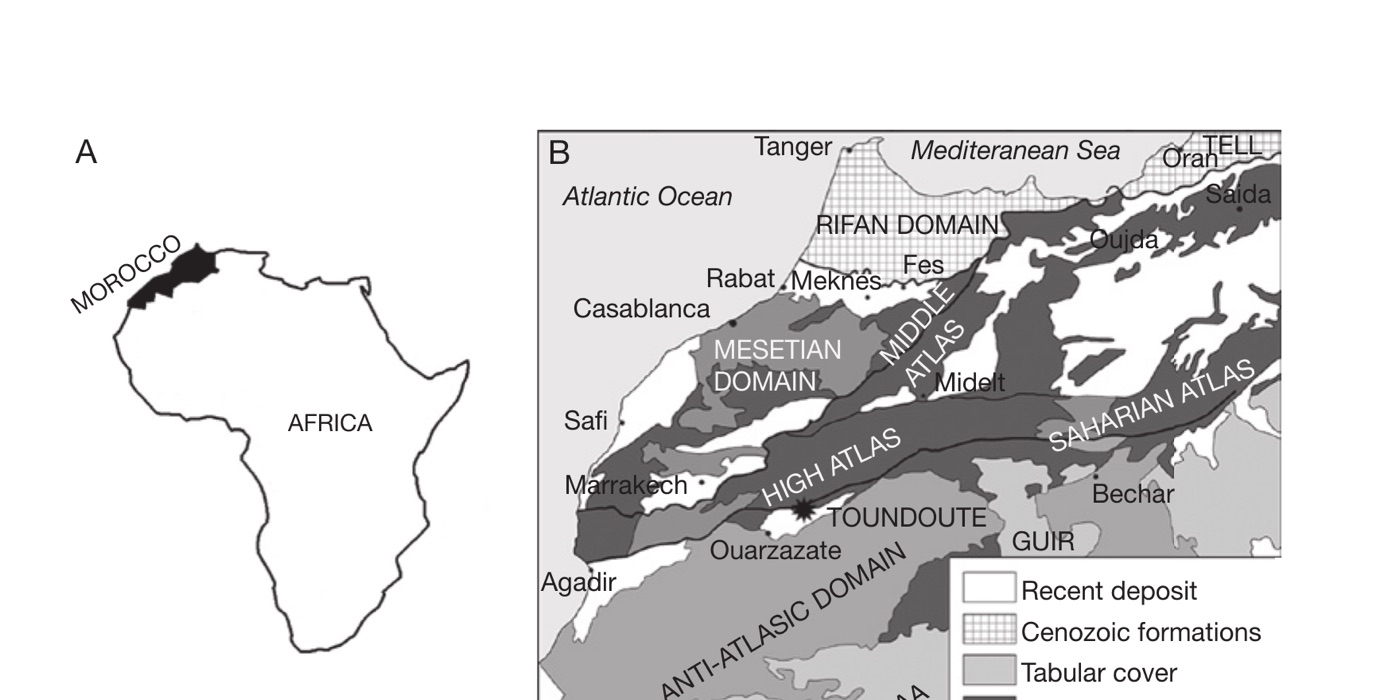
The fossils were found within the Toundoute continental series — a lateral equivalent of the Azilal and Wazzant Formations — a distinctive sequence of red and green sedimentary rocks dating to the late Early Jurassic. These layers were deposited by ancient rivers and floodplains, creating the perfect conditions for fossilization. The remarkable preservation of the Tazoudasaurus remains is a testament to the geological conditions of this formation.
A detailed study of these layers revealed something more dramatic: the bones lie within the deposits of ancient mud-flows — sudden, catastrophic torrents of mud that periodically swept across the floodplain. These rare events buried the animals almost instantly, sealing their skeletons away from scavengers and erosion, which is why so many bones survived unbroken and even still joined together. The same mud-flows are thought to have been the cause of death of the herd itself.
📚 Learn More & References
For additional information about Tazoudasaurus naimi and the discovery:
Scientific Resources:
- Futura Sciences — Tazoudasaurus naimi Documentation — Detailed scientific illustrations and analysis
- Prehistory of Morocco — Tazouda Site — Comprehensive overview of the archaeological site
Academic Publications:
- Peyer, K. & Allain, R. (2010). “A reconstruction of Tazoudasaurus naimi (Dinosauria, Sauropoda) from the late Early Jurassic of Morocco.” Historical Biology, 22(1–3), 134–141. DOI: 10.1080/08912960903562317 — Read on ResearchGate. (Source of the skeletal, skull and fossil-site figures in this article.)
- Allain, R. & Aquesbi, N. (2008). “Anatomy and phylogenetic relationships of Tazoudasaurus naimi (Dinosauria, Sauropoda) from the late Early Jurassic of Morocco.” Geodiversitas, 30(2), 345–424.
- Allain, R., Aquesbi, N., Dejax, J., Meyer, C., Monbaron, M., Montenat, C., Richir, P., Rochdy, M., Russell, D. & Taquet, P. (2004). “A basal sauropod dinosaur from the Early Jurassic of Morocco.” Comptes Rendus Palevol, 3(3), 199–208.
- National Museum of Natural History, Paris — Official research publications on Moroccan Jurassic fauna
Museums & Exhibitions:
- National Museum of Natural History, Paris — Houses the original Tazoudasaurus fossils
- Ouarzazate Dinosaur Museum — Local exhibitions and displays
Community Sources:
- Tiflut Tadlsant n Imɣṛan — كيف كان شكل ديناصور تازوضا؟ — Original Arabic article with excavation images and detailed account (Muh Akandul, 2017)
Scientific Details:
- Scientific Name: Tazoudasaurus naimi (Allain et al., 2004)
- Classification: Sauropoda, Vulcanodontidae
- Age: late Early Jurassic, Toarcian to Early Aalenian (~180 million years ago)
- Location: Tazouda Hill (ⵜⴰⵣⵓⴹⴰ), Ait Zaghar, Ouarzazate Province, Morocco
- Discovery: 1998 (initial find), 2002–2006 (systematic scientific excavation)
- Fossils Extracted: 600+ individual pieces from multiple individuals
- Repository: National Museum of Natural History, Paris, France