The Great Man: When the Mountains of Ait Zaghar Carried a Story of War and Migration to the Big Screen
How French director Sarah Leonor chose the landscapes of Ait Zaghar to film ‘Le Grand Homme’, a deeply human drama about Foreign Legion soldiers and the complexities of immigration — and how the film put the region on the map of world cinema
The Great Man: When the Mountains of Ait Zaghar Carried a Story of War and Migration to the Big Screen
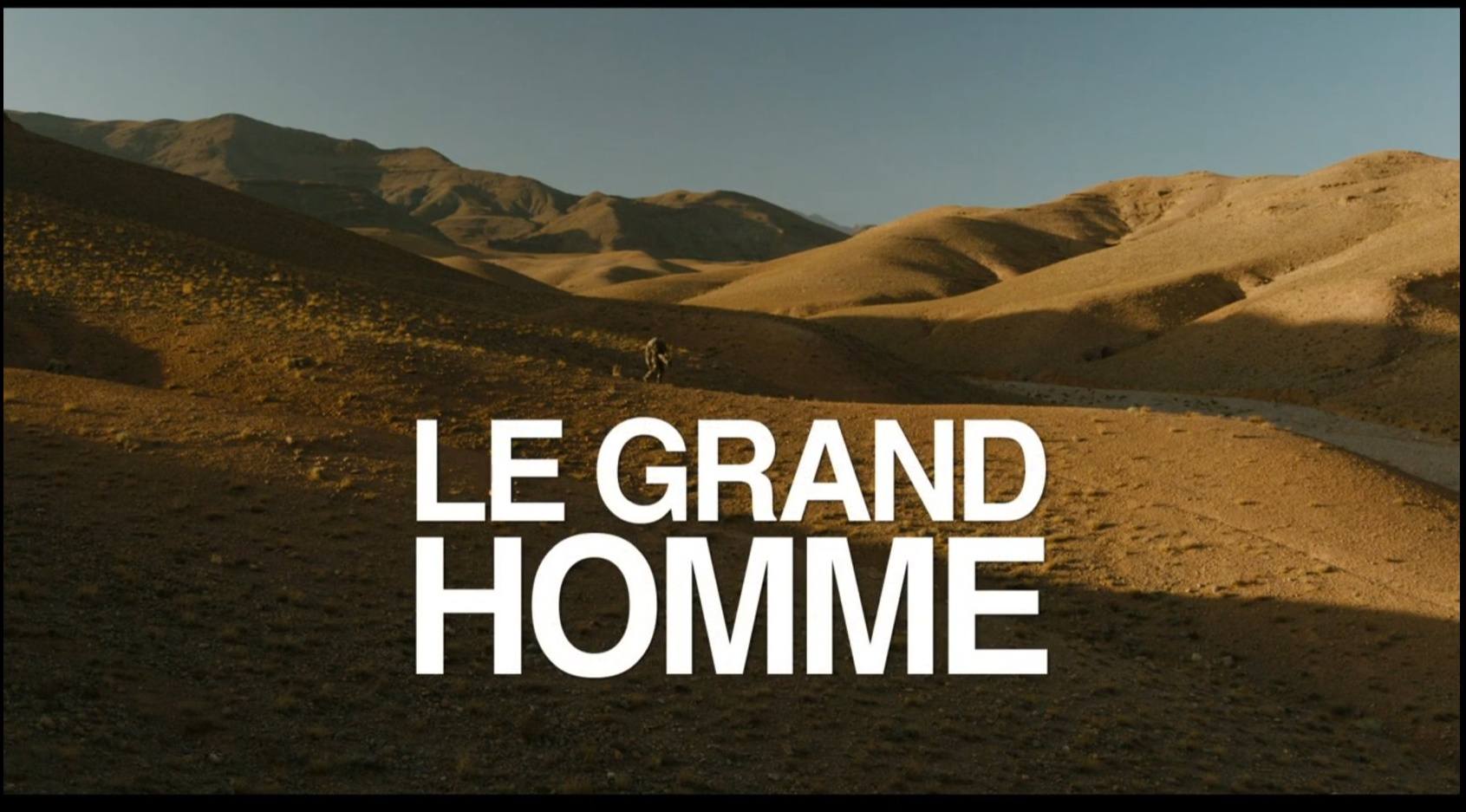
In the summer of 2014, a film arrived in French cinemas that didn’t generate the buzz it deserved — yet left a lasting impression on everyone who watched it. “The Great Man” (Le Grand Homme) by director Sarah Leonor is not just another war drama. It is a deeply affecting human journey that plunges into the depths of friendship and sacrifice, revealing the hidden face of suffering endured by immigrants who fought under the French flag without ever being granted the right to belong.
What makes this film especially remarkable is that some of its most powerful and visually stunning sequences were shot right here, in the heart of Ait Zaghar, in Morocco’s High Atlas mountains.
From Afghanistan to Paris: A Story Torn Between Two Worlds
The film opens in Afghanistan, where Markov (Chechen actor Surho Sugaipov) and Hamilton (Belgian star Jérémie Renier) serve together in the French Foreign Legion. The two soldiers are inseparable, sharing the long days of waiting and the moments of danger that forge a bond stronger than any official document.
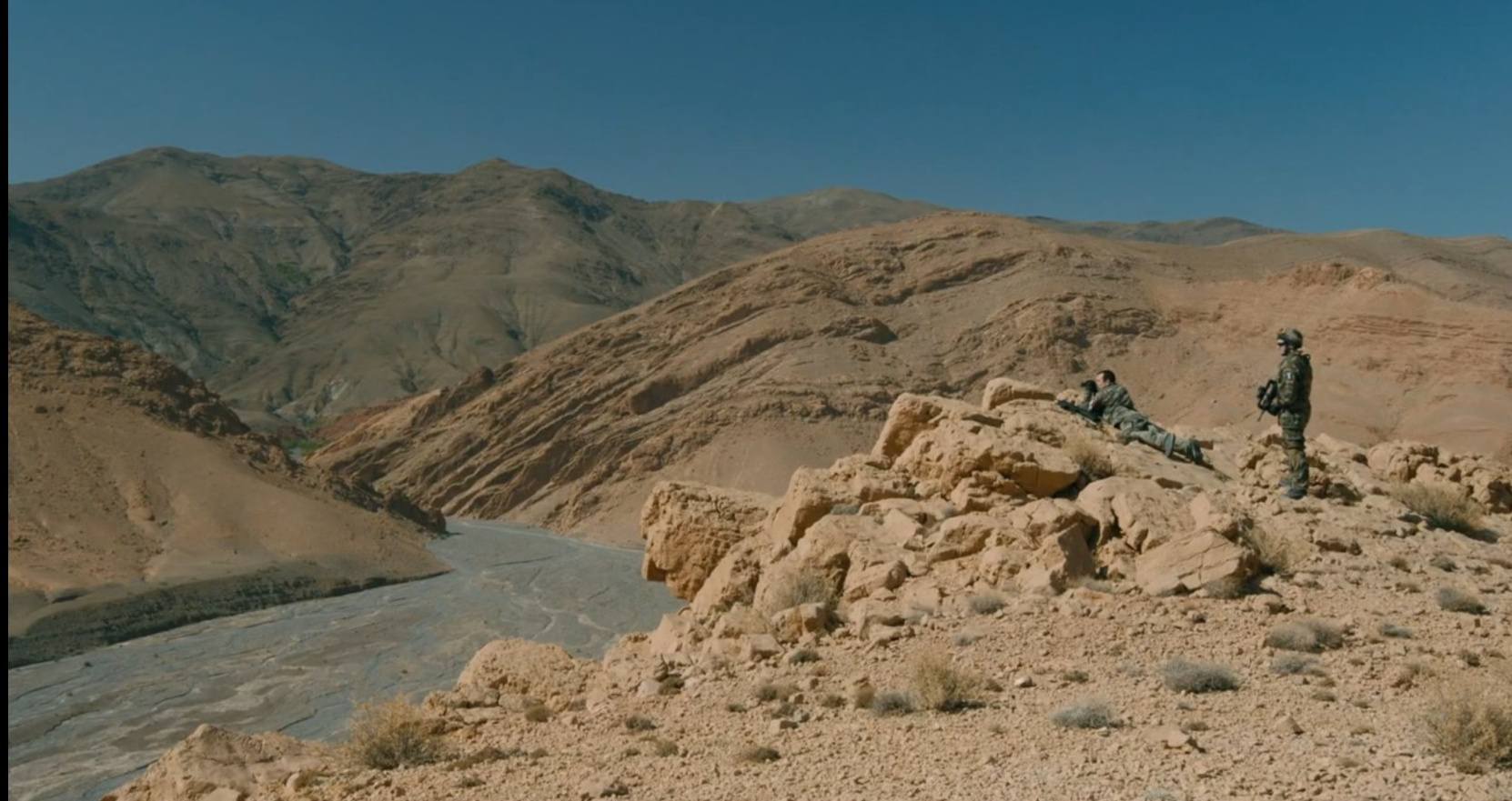
One day, the pair head out on an unauthorized mission to hunt a leopard they spotted the night before. But the adventure turns to nightmare when they fall into an ambush and Hamilton is shot — nearly fatally. In that moment, Markov makes a decision that will alter both their destinies: he carries his comrade on his shoulders back to safety, saving his life but defying military orders in the process.
This act of heroism goes not rewarded but punished. Upon their return to France, Markov is given a choice: sign up for another three years of service, or face dishonourable discharge without obtaining the French citizenship he had been promised. And here lies the film’s most painful irony — the man who saved his French comrade’s life is denied the right to remain on French soil.
Markov — whose real name is Mourad — chooses to stay in Paris as an undocumented immigrant. We gradually learn that he is a Chechen refugee who fled the war in his homeland, and that his ten-year-old son Khadji (played by Ramzan Idiev) is waiting for him in the city. Mourad finds himself navigating Paris’s dark corners, trying to build a new life for his child while the spectre of deportation looms over them.
Meanwhile, Hamilton — real name Michaël — returns to civilian life in Paris as a free man. But his freedom is tainted by the trauma of war. Suffering from PTSD, he moves through his surroundings as though a stranger to them. And when he learns of the struggles facing the man who saved his life, he finds himself compelled to repay his debt in a way he never expected: caring for Mourad’s young son.
Why Ait Zaghar? The Secret Behind the Location Choice
When director Sarah Leonor began searching for a location that could convincingly stand in for Afghan terrain, Ait Zaghar wasn’t merely a practical choice — it was a cinematic revelation.
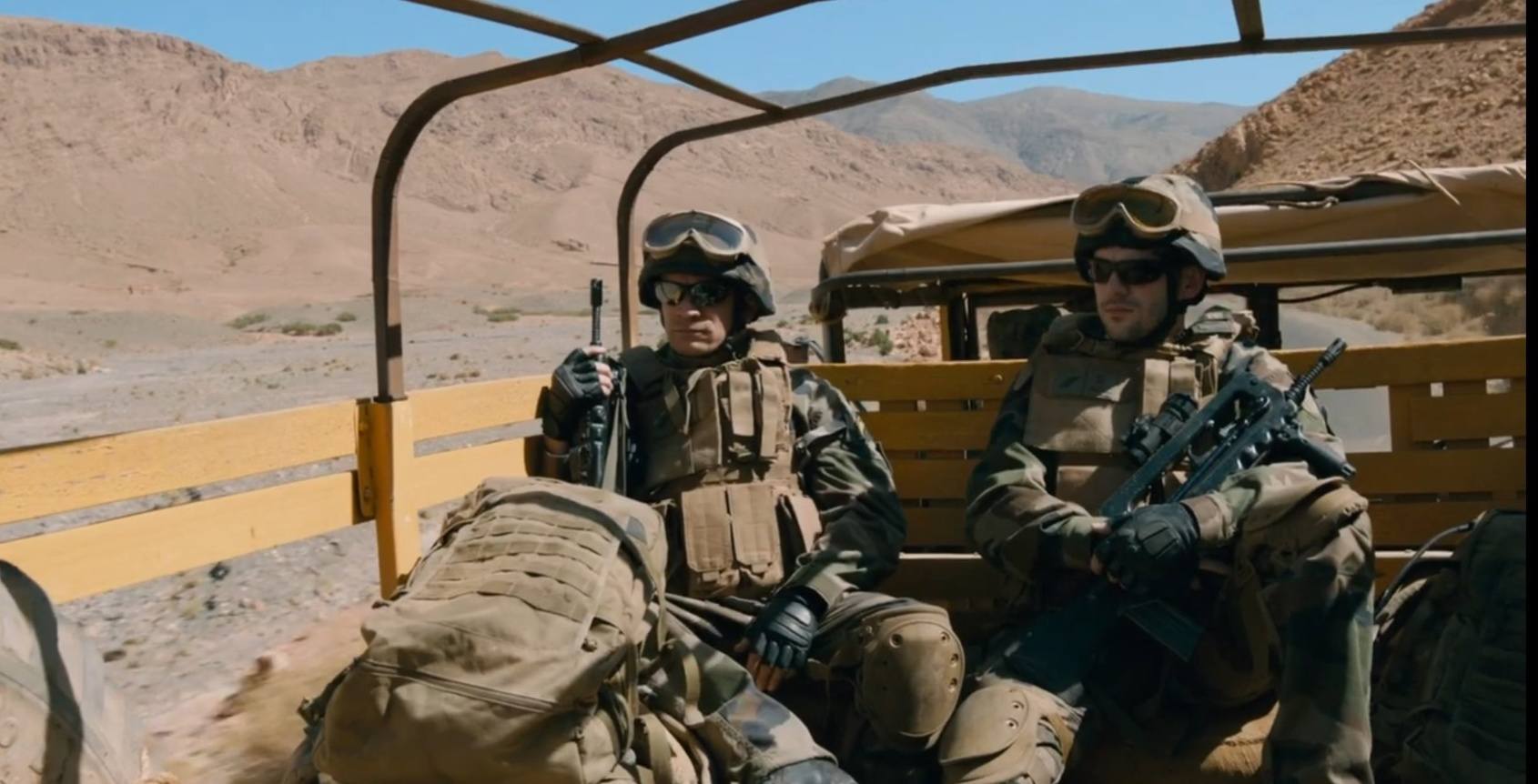
The region possesses everything a filmmaker seeking authenticity could need: rugged rock formations resembling the passes of the Hindu Kush, arid plains stretching endlessly under a blazing sky, and traditional Amazigh (Berber) architecture of mud and stone that lends scenes a visual depth impossible to recreate in a studio. Add to that the extraordinary natural lighting provided by the High Atlas mountains — that golden glow that transforms into dramatic shadows at sunset.
Cinematographer Laurent Desmet, known for his work on Shall We Kiss?, exploited these natural elements with great skill. His lengthy, fluid tracking shots — praised by critics as both “precise and nuanced” — demanded vast, open spaces, which the landscapes of Ait Zaghar provided generously.
The region lies near Ouarzazate, nicknamed “Africa’s Hollywood” for its long history with the global film industry. But what distinguishes Ait Zaghar specifically is its untouched, pristine character — a landscape unspoiled by urban development, offering filmmakers a natural backdrop requiring no alteration whatsoever.
A Cast Between Stardom and Discovery
One of the film’s most striking elements is its blending of professional actors with amateurs — a choice that gives the work a raw realism difficult to achieve with a conventional cast.
Jérémie Renier, who plays Hamilton, is one of the most prominent faces in Belgian and French cinema. He began his career at just fifteen in the Dardenne Brothers’ La Promesse, and matured into an actor capable of conveying complex emotions with minimal dialogue. In “The Great Man,” he convincingly portrays a soldier suffering from PTSD — twitchy, fragile, searching for solid ground beneath his feet.
Surho Sugaipov, who plays Markov, has a story that could be a film in itself. He was a student at the Faculty of Economics at the University of Cologne and a professional MMA fighter before turning to acting. His performance in the film — his very first role — impressed critics, with The Hollywood Reporter describing it as “an impressive turn from a Chechen amateur.”
Young Ramzan Idiev as Khadji adds a deeply moving human dimension. Like Sugaipov, he is a non-professional Chechen actor. This deliberate casting of amateurs gave the film an authenticity that cannot be acted.
| Actor | Character | Character’s Real Name |
|---|---|---|
| Jérémie Renier | Hamilton | Michaël Hernandez |
| Surho Sugaipov | Markov | Mourad Massaev |
| Ramzan Idiev | Khadji | — |
| Daniel Fassi | Afghan Officer | — |
| Jean-Yves Ruf | Colonel Lacour | — |
| Sabine Massé | Sabina | — |
| Miglen Mirtchev | Johnson | — |
| Paul Massé | Magomed | — |
Sarah Leonor: A Director Who Tells War Through Different Eyes
It is uncommon for a female director to take on cinema’s ultimate male bastion — the French Foreign Legion. But Sarah Leonor did so with a style that makes you forget any such categorisation.
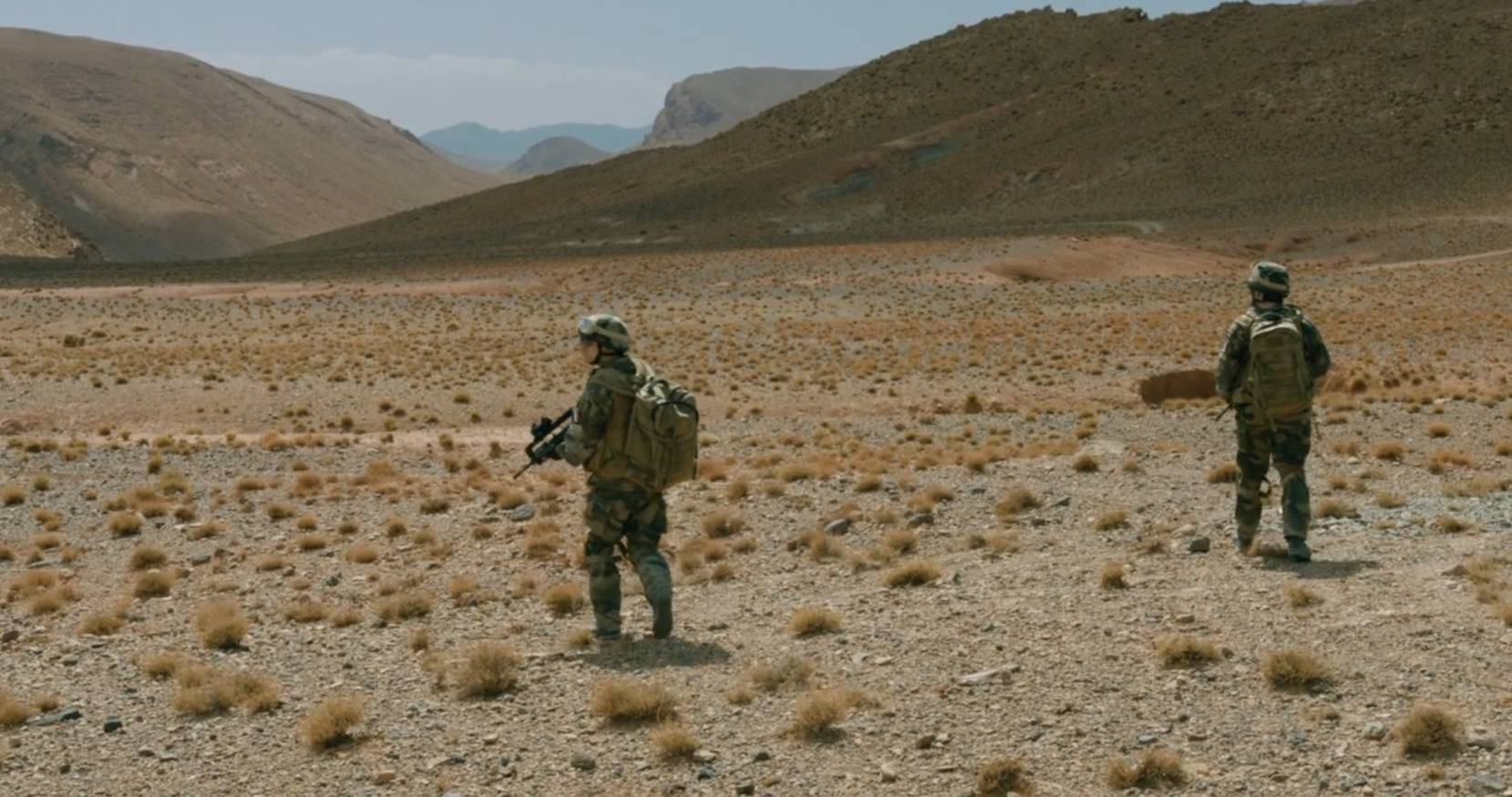
Before “The Great Man,” Leonor directed her debut Une vie toute neuve (A Real Life), starring the late Guillaume Depardieu. With her sophomore effort, she proved herself a filmmaker of mature vision and distinctive visual style.
Critics compared her to Claire Denis, who delivered her masterpiece Beau Travail about the Foreign Legion in 1999. Peter Keough of the Boston Globe wrote: “It takes a woman to make a great film about the all-male bastion of the French Foreign Legion. Claire Denis did so in Beau Travail, and Sarah Leonor nearly equals that feat in The Great Man.”
What defines Leonor’s style is what Manohla Dargis of The New York Times described as “a keen eye and a gentle, unassuming touch.” She shifts between moods and storytelling modes seamlessly, “like a pianist sliding her hand down a short, soft glissando.” The film is divided into chapters whose titles reflect the characters’ shifting identities — a clever narrative device that mirrors the film’s central theme: the search for identity.
What the Critics Said
The film earned a Metascore of 73 out of 100 — generally favourable reviews — based on 6 major critical assessments. Here’s what the most prominent voices had to say:
“The filmmaker Sarah Leonor has a keen eye and a gentle, unassuming touch. In The Great Man, she discreetly changes moods and storytelling modes like a pianist sliding her hand down a short, soft glissando.” — Manohla Dargis, The New York Times (100/100)
“An arresting work, combining substance and style in innovative ways… it manages to feel both real and otherworldly at the same time, revealing the extraordinary obstacles faced by France’s anonymous underclass.” — Jordan Mintzer, The Hollywood Reporter (80/100)
“It exploits the military aesthetics that lend themselves so well to breathtaking sounds and visuals without fetishizing them.” — Diego Semerene, Slant Magazine (75/100)
“If Sarah Leonor’s film about the return of two French Foreign Legionnaires from war doesn’t move you, then check your MRI for signs of an empathectomy.” — Shari Kizirian, critic
Film critic Jonathan Romney of Film Comment praised the film as “one of those films that keep you wondering just where it’s going, and that keep you holding on, even when — especially when — it’s as if you’re feeling your way in the dark.”
The Film’s International Festival Journey
“The Great Man” didn’t just receive a commercial release in France — it made its way through some of the world’s most prestigious film festivals:
- Toronto International Film Festival (TIFF) 2014 — screened in the Discovery section, dedicated to promising new works
- Göteborg Film Festival 2015 — one of Scandinavia’s largest film festivals
- New Directors/New Films 2015 — the prestigious programme co-presented by MoMA and the Film Society of Lincoln Center in New York
- Festival du Nouveau Cinéma 2014 — Montréal
- US theatrical release through Distrib Films in August 2015
This diverse festival circuit demonstrates that the film resonated with multicultural audiences, from North America to Northern Europe.
Behind the Camera: A Distinguished Production Team
The film was a thoroughly French production, backed by significant institutional support:
- Production: Les Films Hatari, Le Studio Orlando
- International Distribution: BAC Films
- Producer: Michel Klein
- Cinematography: Laurent Desmet — whose visual style balances precision and sensitivity
- Editing: François Quiqueré
- Score: Martin Wheeler — known for his mesmerising music in Age of Uprising: The Legend of Michael Kohlhaas
- Production Design: Laurent Baude
- Costume Design: Pierre-Yves Gayraud
- Funding: Ciné+, Cinémage 8, Indéfilms 2, the National Centre for Cinema and the Moving Image (CNC), Île-de-France Region
A Small Film With a Big Echo
Although “The Great Man” didn’t achieve major commercial success — with worldwide earnings of approximately $7,814 — it remains a work of art of exceptional value. Running 107 minutes and spoken in French and Chechen, the film’s bilingual nature itself mirrors the dual-identity theme at its core.
The film’s true value transcends numbers. It raises fundamental questions that remain as urgent today as ever: What does it mean to fight for a country that refuses to recognise you? Is loyalty measured by official documents or by the blood spilled on the battlefield? And how does a society welcome back those it sent to war?
As The Hollywood Reporter wrote: “It manages to feel both real and otherworldly at the same time, revealing the extraordinary obstacles faced by France’s anonymous underclass as they navigate a society that leaves them little room for manoeuvre.”
Ait Zaghar: From Cinematic Backdrop to Global Destination
The association of Ait Zaghar’s name with “The Great Man” is part of a larger story. The region, situated in the heart of Morocco’s High Atlas near Ouarzazate — “Africa’s Hollywood” — possesses unique cinematic assets: diverse terrain ranging from towering mountains to arid plains, unrivalled natural light, and an Amazigh architectural heritage that lends any scene historical depth.
Leonor’s choice of Ait Zaghar was no accident. She was looking for a place that could be Afghanistan on screen, but she found something more — a place whose very terrain carries the same existential struggle that her story tells.
Film Details
| Original Title | Le Grand Homme |
| Release | 13 August 2014 (France) / August 2015 (USA) |
| Director | Sarah Leonor |
| Screenplay | Emmanuelle Jacob, Sarah Leonor |
| Runtime | 107 minutes |
| Languages | French, Chechen |
| Genre | Drama, War |
| Metascore | 73/100 |
| Country | France |
Ultimately, “The Great Man” is not merely a film about war and immigration — it is a testament to the power of human bonds that transcend borders, nationalities, and official papers. And just as it tells the story of Markov and Hamilton, it also tells the story of Ait Zaghar: a land whose quiet beauty proved capable of carrying the emotions of an entire world upon its shoulders.
Visit Ait Zaghar to experience for yourself the landscapes that Sarah Leonor chose as the backdrop for this profoundly human drama. You’ll discover that the beauty of this place in reality surpasses anything a camera can capture.