Tlghnja: The Rain Bride Who Once Walked the Villages of Imghrane
When the rain failed, women and children dressed a wooden ladle as a bride and carried her through the village to call Amzar, the rain. The myth, the ritual, and its quiet end in Ait Zaghar.
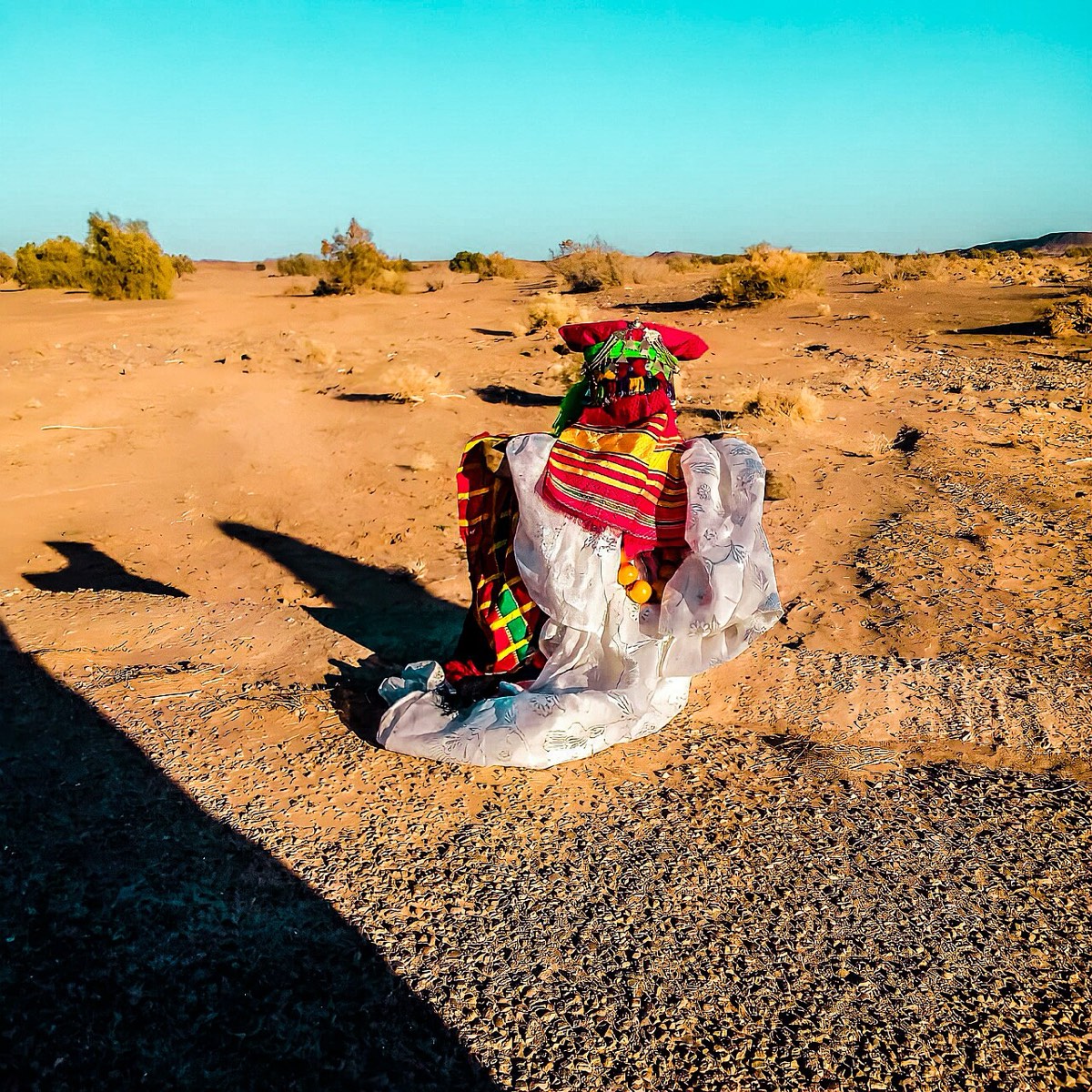

When the rain was late and the young barley began to wither in the fields, the villages of Imghrane had an answer older than any of their kasbahs. The women took the big wooden ladle from the kitchen, dressed it as a bride and carried it from door to door, the children singing behind them, to call on Amzar, the rain (Anzar in most other Amazigh regions). They called her Tlghnja (ⵜⵍⵖⵏⵊⴰ).
The ritual is one of the oldest and most widespread in North Africa: in 1920 the ethnographer Émile Laoust found it “from the Atlantic to Cyrenaica”. In Imghrane it lasted into our own century. In Ait Zaghar, the procession was still going out until the early 2010s; then it stopped.
This first article in our Mythology series brings together what is known about Tlghnja, its name, its myth and its songs, by checking the Arabic Wikipedia article against the older sources it draws on.
🥄 A Ladle Dressed as a Bride
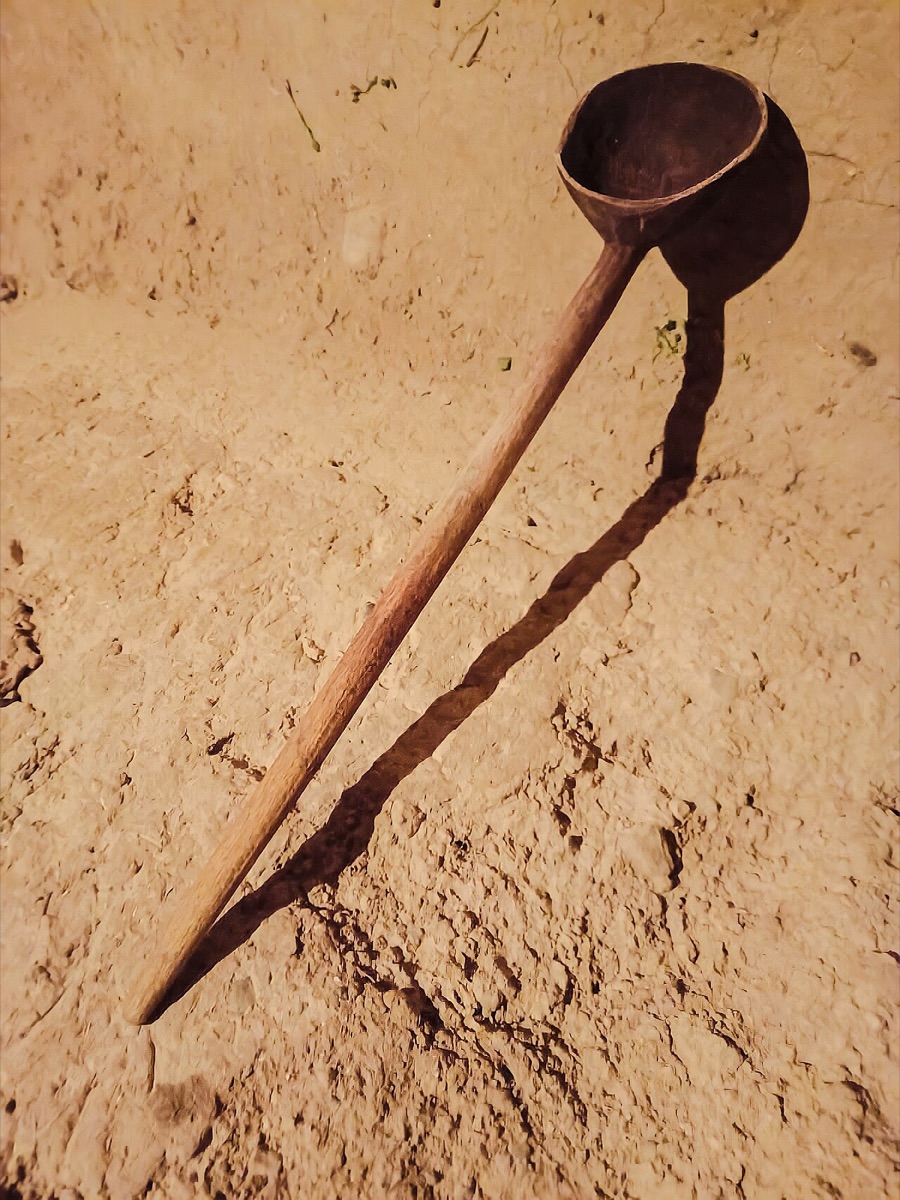
The name comes from aghenja (ⴰⵖⵏⵊⴰ), the large wooden ladle used to serve soup and couscous and to draw water. Once dressed, the ladle becomes a doll: the rounded bowl is the head, a piece of cane tied across it makes the shoulders, and the women add a bride’s dress, a headscarf, necklaces and earrings. Some villages tied two ladles face to face, their bowls turned to the sky like palms raised in prayer.
The name changes from valley to valley (Tlghnja, Tlaghnja, Taghenja, Taghounja, or Belghenja in Arabic-speaking areas), but the idea stays the same. Linguists read Tlaghnja as “she of the ladle” (tla + aghenja) and Tlghnja as “the wrapped ladle”. Elsewhere the doll is simply called Tislit n Unzar, “the bride of the rain”, the very words many Amazigh speakers use for the rainbow. Where there was no ladle, the doll could be built on a funnel, a reed or a winnowing shovel, and it still kept the ladle’s name.

⚡ Anzar and His Bride
Anzar (ⴰⵏⵥⴰⵔ) is the old pan-Amazigh word for rain, and in these rituals the rain is a person: a masculine figure, the lord of the rain.
In Imghrane the word is pronounced amzar (ⴰⵎⵥⴰⵔ), with an m rather than an n: it is the same word in its local form, a pronunciation the linguist Salem Chaker also notes in Ouargla and in parts of the Rif. The older sources quoted in this article were recorded elsewhere and write Anzar; in Imghrane, read Amzar.
The only known legend that explains the rite was written down by Henri Genevois among the At Ziki of Kabylia, and later summarised by the historian Gabriel Camps:
Anzar, lord of the rain, wished to marry a girl of wondrous beauty who bathed in a silver river. She refused him, afraid of what people would say. Anzar turned the ring on his finger: the river ran dry and he vanished. The girl cried out to the sky, “O Anzar, let the river flow again!”, and he came back as a great flash of lightning. The river flowed again, and the earth turned green.
“That is the origin of the custom,” the account ends: in times of drought, Anzar must be given a bride. According to the same text, a real girl once played that part, until a decorated ladle took her place. Versions of the story were still told in the Tafilalt and around Midelt until at least 2011.
For Laoust, the doll stood for the Earth itself, a bride waiting for her husband, the rain. The procession, he wrote, “has every appearance of a wedding procession”, and in some villages a second figure, argaz n Tlghnja (“Tlghnja’s husband”), walked beside her. Camps adds that in parts of the High Atlas, Anzar himself was represented, dressed in black like a sky heavy with rain.
🚶♀️ How the Ritual Unfolded
Tlghnja had no date on the calendar. It was called whenever the rain failed, most often in winter or early spring, when the grain had sprouted but a dry spell could still ruin the year. From one region to the next, the core of the rite was the same.
The bride
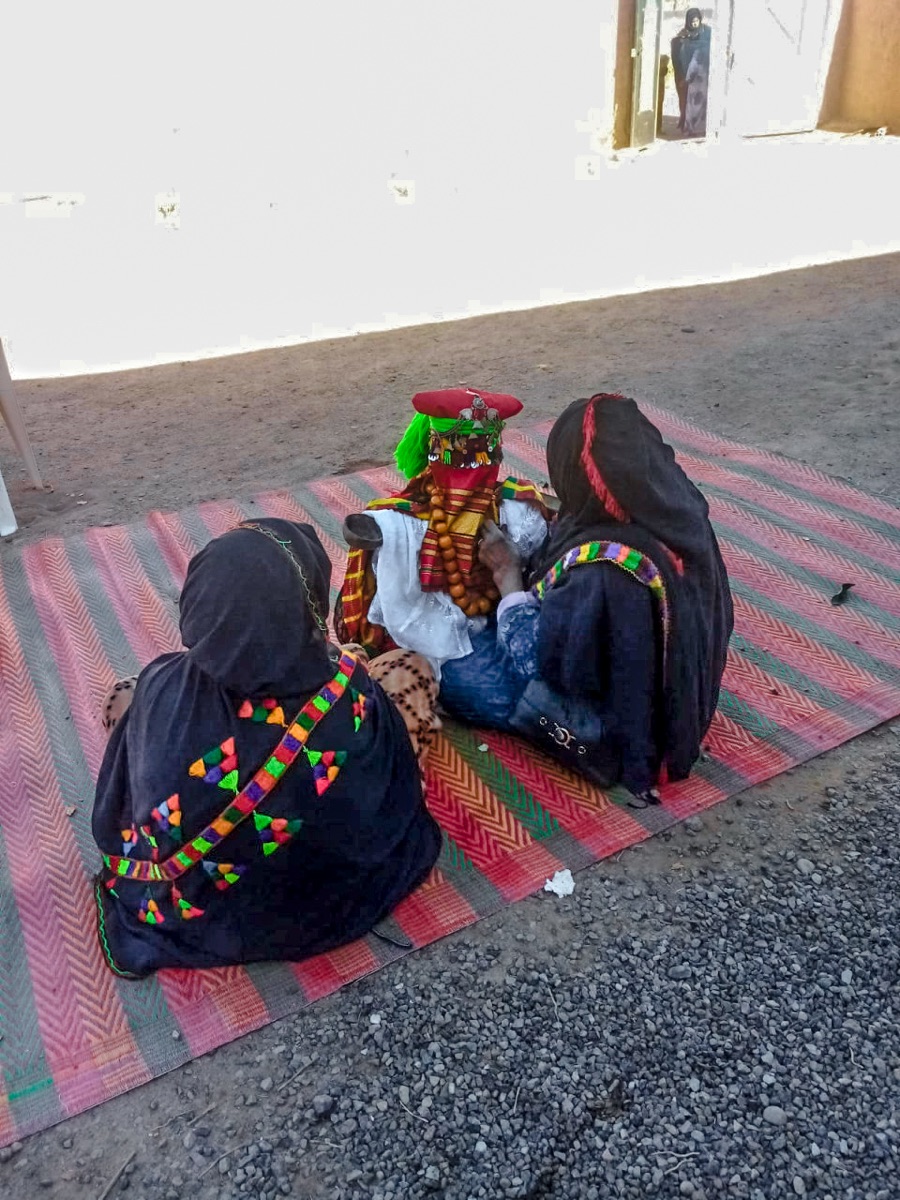
Older women of good reputation dressed the ladle. In Marrakech, Laoust describes them tying two large ladles in a cross at the end of a long reed, painting eyes, nose and mouth on the bowl, reddening the cheeks, and wrapping the head in silk scarves. “The peoples of the Haouz of Marrakech and the tribes of the High Atlas,” he noted, “take particular care in making this doll.”

The procession
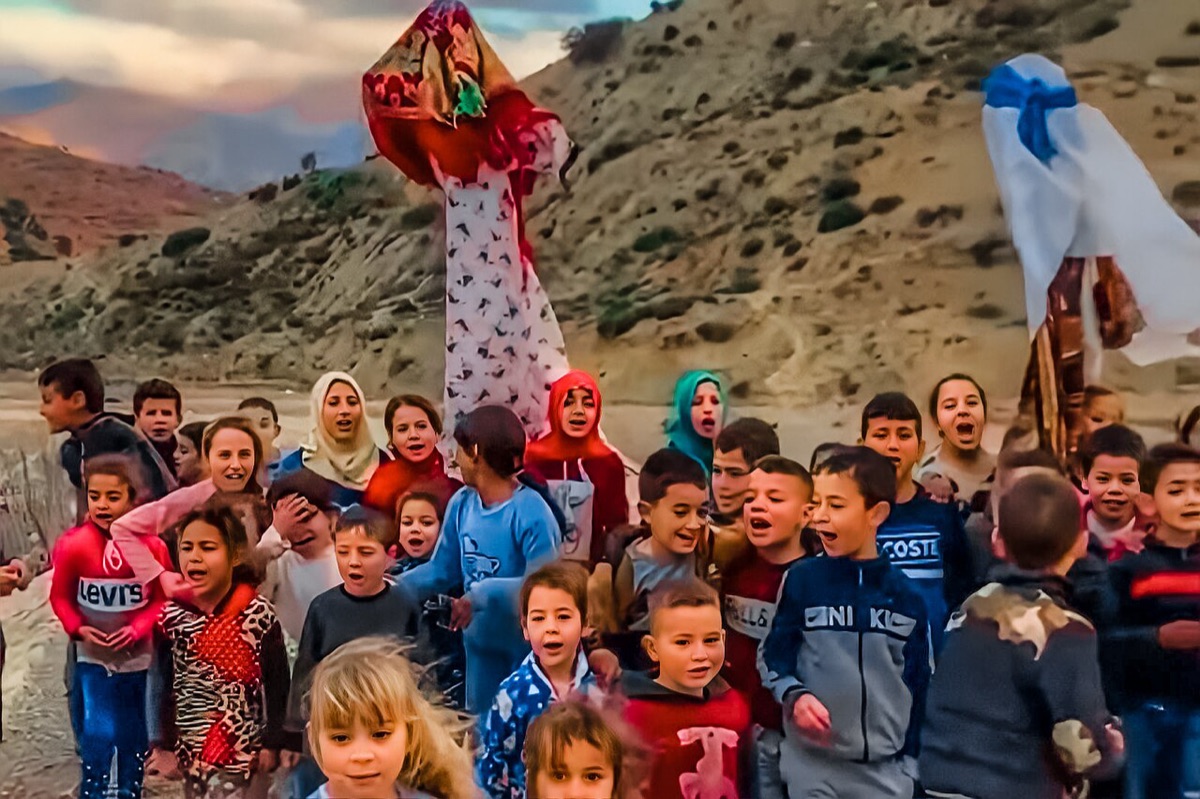
The procession belonged to women and children. They carried the bride through the lanes, around the village and to the shrines of local saints. At each door the family threw water over the doll and her followers, a stand-in for the rain they were asking for, then gave something for the pot: flour, oil, vegetables, sometimes meat. Among the Ait Chitachen, near Demnate, the women even slid the doll down the roof gutters while jugs of water were emptied over her from the terraces. Only among some Middle Atlas tribes did the men parade a figure of their own, Ali bu Tgelmust, “Ali of the Hood”, with the same songs, water and gifts.

The songs
The words changed from place to place, but they always asked for the same thing. Laoust recorded this chant among the Ait Chitachen, on the other side of the Atlas from Imghrane:
O Tlghnja, make rain for us!
O Tlghnja, bring us the rain,
so the grass grows on the hills
and the lambs multiply!
In the Arabic-speaking plains around Marrakech, the women sang:
Taghenja hellat rasha, ya Rebbi bell khrasha!
Taghenja ya mm rja, ya Rebbi jib ech-chta!
“Taghenja has uncovered her head: O Lord, wet her earrings! Taghenja, mother of hope: O Lord, bring the rain!”
Further south-east, among the Ait Khebbash, the chant asks Tlghnja to raise her palms to the sky and beg God for a heavy rain, because “the land has dried up”.
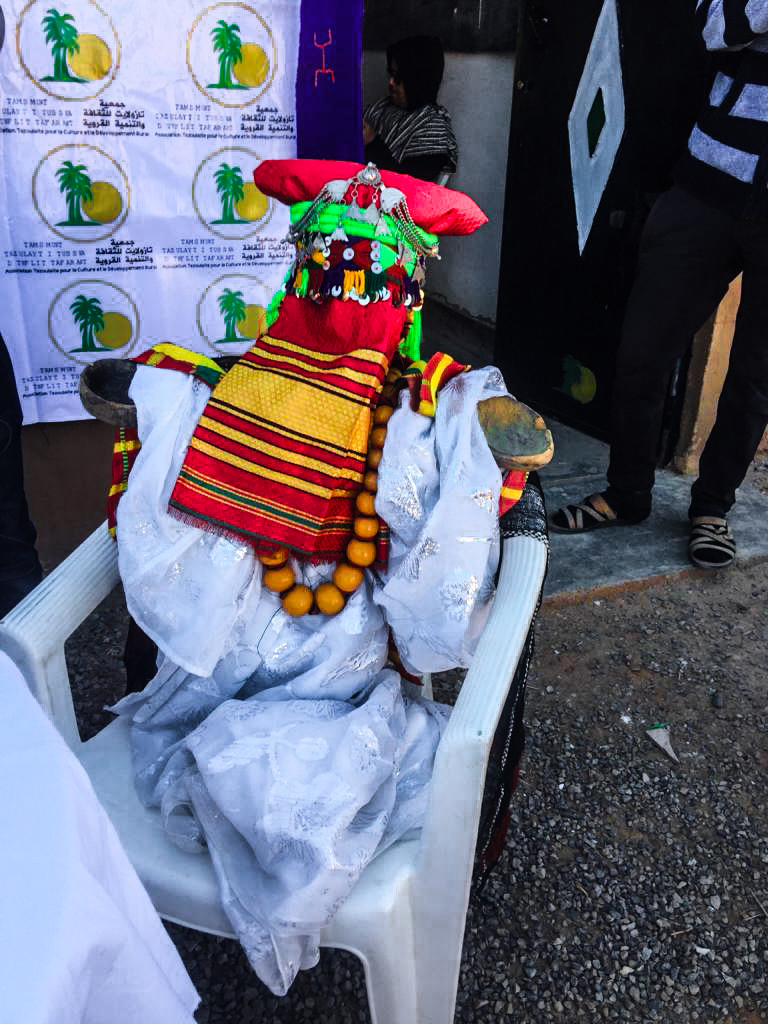

The shared meal, and the doll’s fate
The gifts gathered door to door were cooked into a communal meal, usually couscous, often called lmaarouf, and eaten together near a shrine, by the river or along the irrigation channel.
Afterwards the doll was usually undressed and taken apart, or destroyed. In the Tafilalt the women ended the procession with a mock fight that tore the doll to pieces, and each kept a scrap of it in the family chest for its blessing. At Timgissin the children buried her in an abandoned cemetery. Near Amizmiz and Imi n’Tanout she was thrown into a pond: if she sank head first, the year would be rainy. In Kabylia the ladle simply went back to its owner, set aside for the next drought.
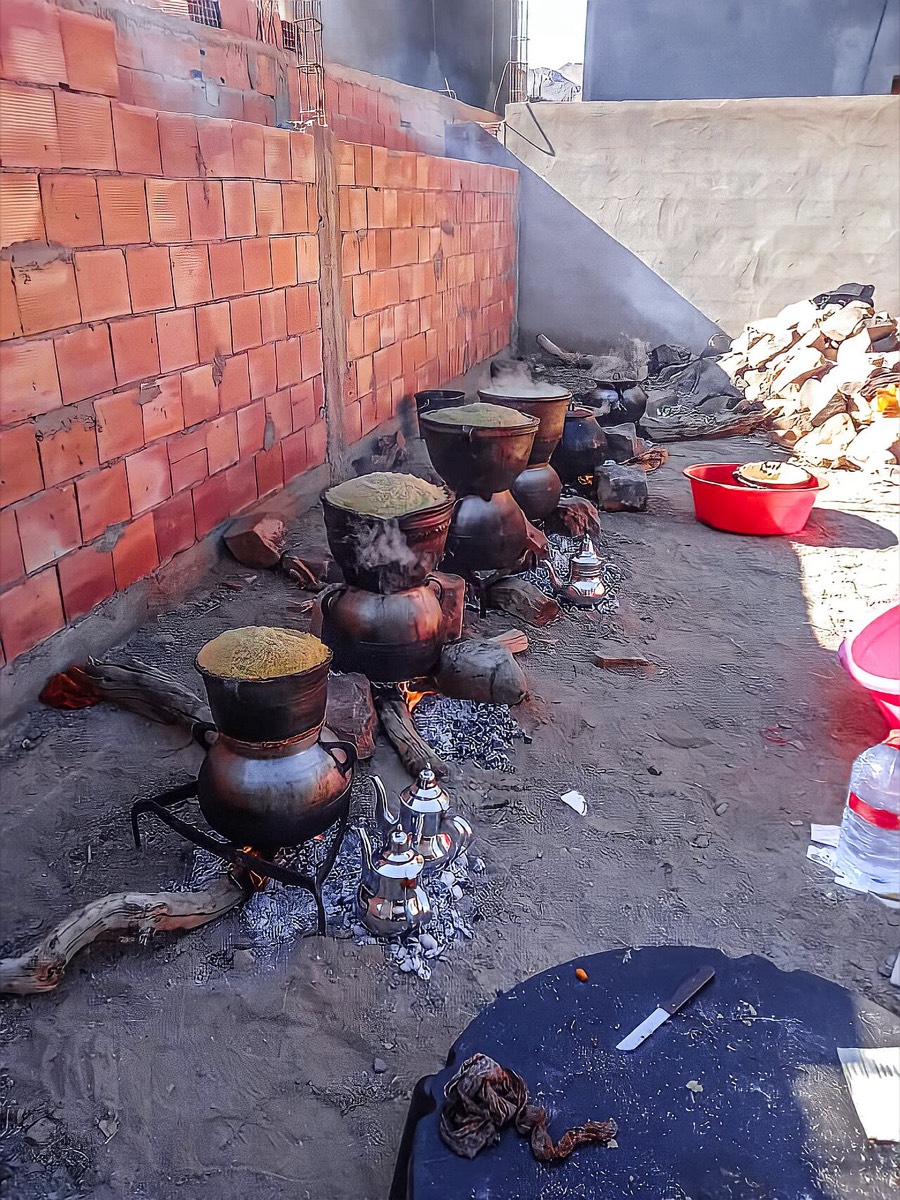

☀️ When the Rain Would Not Stop
The ladle also worked in reverse. When storms threatened the harvest, a woman among the Imtougga, usually the wife of the village fqih, turned the ladle upside down, its bowl facing the ground: enough water.
Laoust recorded a rite of this kind among the Imeghran, the old spelling of Imghrane, whose tall houses and fortified granaries he describes in the same book. To stop a rain that would not end, a woman heated a shard of pottery in the fire, dropped it into a jug of rainwater mixed with ewe’s milk, carried the jug to a crossroads and broke it there, saying:
“Thus may misery be destroyed! O God, come to our aid and bring back plenty!"
(Imeghran, recorded by Émile Laoust, 1920)
It is a rare written trace, more than a century old, of the weather lore of Imghrane itself.
🏔️ Tlghnja in Imghrane
In Imghrane, Tlghnja belonged to the same world as the irrigation channels, the threshing floors and the shared work of the harvest: when the rain failed, the women and children went out to call it. Gabriel Camps noted that the rite, once found all over the Maghreb, stayed most alive in the pre-Saharan regions, the world Imghrane belongs to on the southern slopes of the High Atlas.
In Ait Zaghar, the procession was still going out until the early 2010s. Then it stopped.
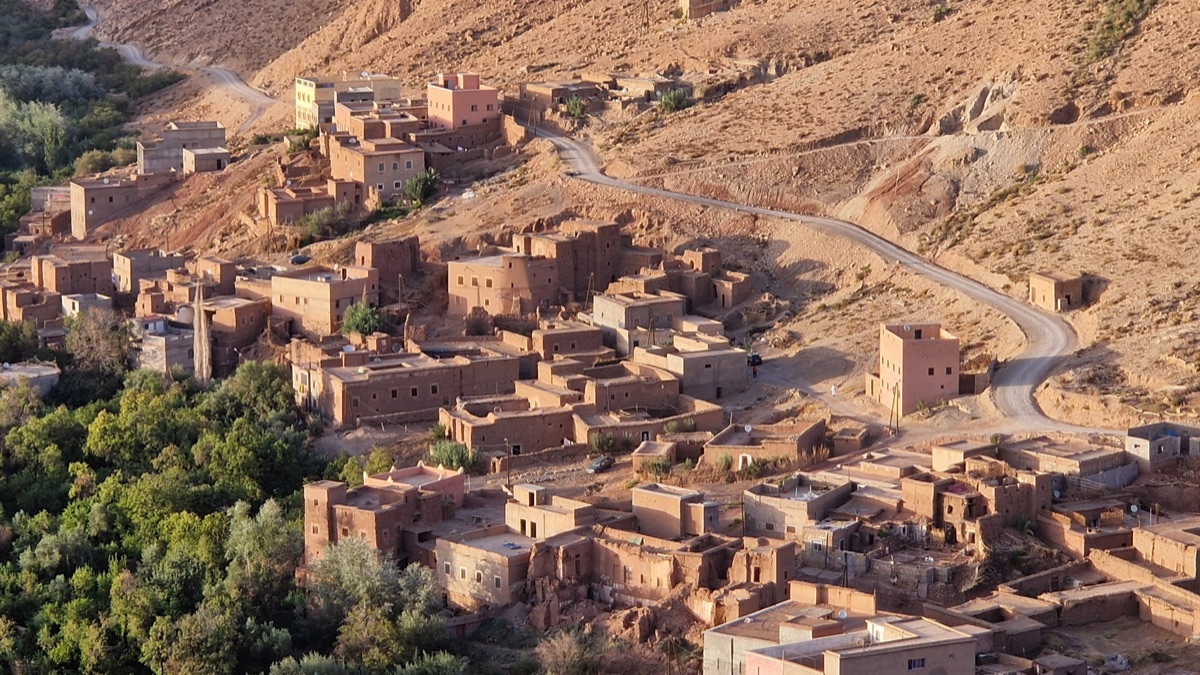
Researchers who have followed the ritual’s decline across Morocco point to the same causes: fewer people believe in it; schooling and weather forecasts have changed how drought is understood; television, the internet and emigration have opened the villages to the world; and the rite is often dismissed as superstition or reduced to a folklore show. A Hespress report written during the 2022 drought notes that most of these rain rituals have now disappeared from the Moroccan countryside. Some associations have revived Tlghnja as heritage, for example near Tinghir in 2020 and at Touroug, in Errachidia province, in 2021.
The ritual even gave its name to a classic of Moroccan cinema: Taghounja (1980), directed by Abdou Achouba, with Larbi Batma and Omar Sayed of Nass El Ghiwane.
Did you walk behind Tlghnja in Imghrane, or do you remember the words your village sang? Share your memories with us so the local version is not lost.
📚 Sources
- Wikipedia (Arabic), “تلغنجا”, consulted October 2026.
- Émile Laoust, Mots et choses berbères, Paris, Challamel, 1920: rain rites, pp. 202–216; rites against rain, including the Imeghran, pp. 247–249; the Imeghran house, pp. 7–8.
- Gabriel Camps and Salem Chaker, “Anẓar”, Encyclopédie berbère, vol. 6, 1989, pp. 795–798.
- Henri Genevois, “Un rite d’obtention de la pluie : la fiancée d’Anzar”, 1978.
- Marie-Luce Gélard, “Rogations pour la pluie”, Encyclopédie berbère, 2016.
- Rachid Bijiken, “«بلغنجا» .. طقوس تستمطر السماء لتجاوز محنة الجفاف وندرة الماء”, Hespress, 15 February 2022.
Ritual photos: مصطفى ملو on Wikimedia Commons, licensed CC BY-SA 4.0. Ait Zaghar photo: Imghrane gallery.