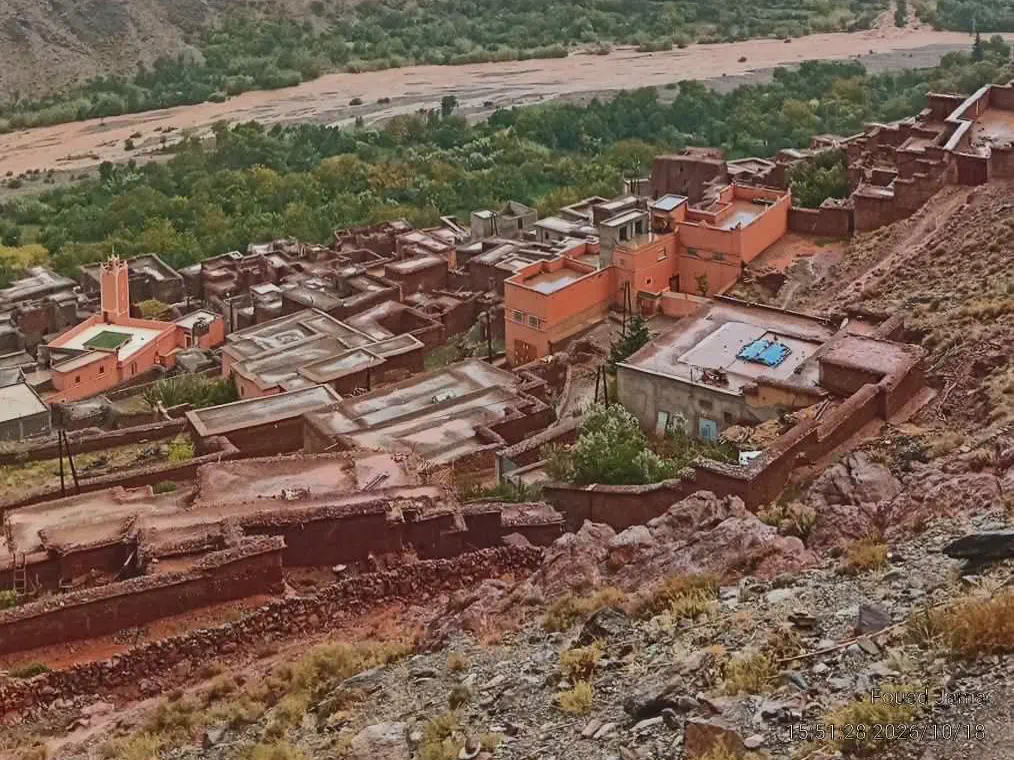
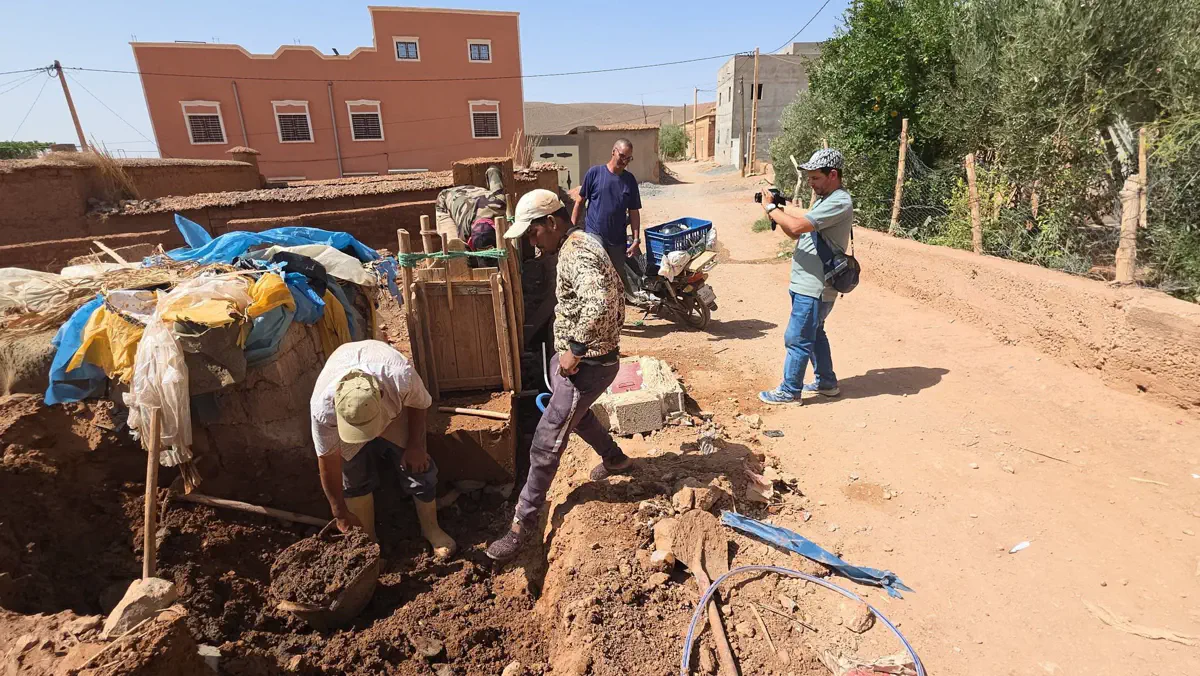
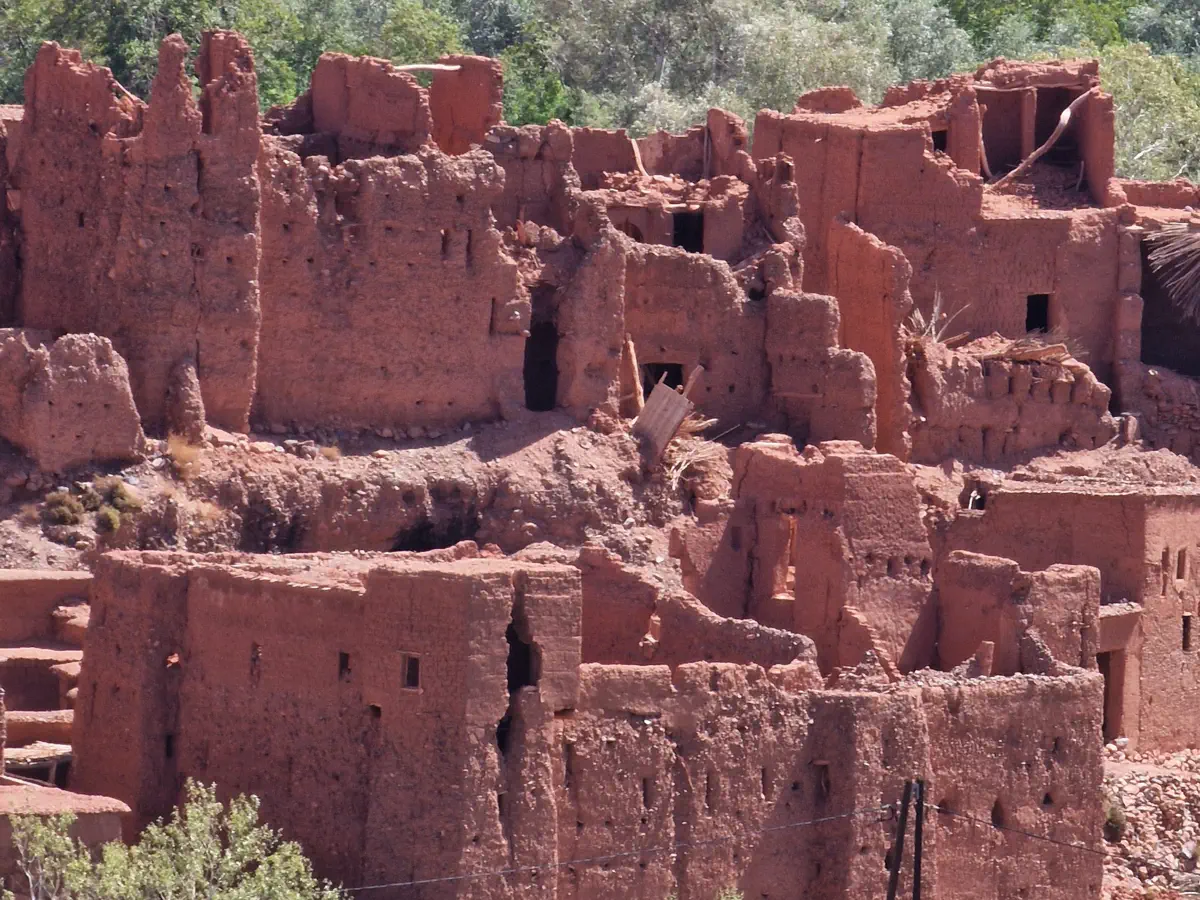
In April 2026, the president of the Toundoute commune council formally notified several families that their old kasbah houses are at risk of collapse. The owners are asked to demolish them at their own expense, to prevent a sudden collapse and unexpected damage.
The notices are based on the report of the provincial committee on buildings at risk of collapse, under Law 94-12 on buildings at risk of collapse, which makes owners responsible for the safety of their buildings and allows the president of the commune council to order their repair or demolition.
Weakened since the 2023 earthquake
Many of these kasbahs, built of rammed earth (tabout) and often abandoned for decades, were weakened by the Al Haouz earthquake of 8 September 2023; Ouarzazate was one of the six provinces covered by the reconstruction programme. Some were partly or totally damaged, and others have already been partly torn down, such as Imich in Toundoute and Tighremt in Aguerd N'Ouzrou.
Safety first
This is good news for safety, especially for the families living next to these walls, for passers-by and for children who play nearby. A falling earthen wall can cause serious damage.
It also follows the support granted after the earthquake: 140,000 dirhams to rebuild a home that collapsed, 80,000 dirhams to repair and rehabilitate a partially damaged one, and monthly support of 2,500 dirhams for affected households. In Ouarzazate province, the first reconstruction payments were launched from the commune of Imi N'Oulaoune.
What about our heritage?
Yet every kasbah that disappears takes part of Imghrane's history with it: centuries of building know-how, family memory and the very shape of our villages. And almost nobody builds with earth anymore; cement has replaced tabout. Architects have criticised the "all-concrete" reconstruction after the earthquake, pointing out that cracked rammed-earth walls can often be repaired, even though the royal instructions asked that rebuilding respect the region's heritage and its unique architectural character.
Could some kasbahs be stabilised instead of demolished? Could the most remarkable ones at least be documented, with photos, plans and testimonies, before they are gone? If you have photos or stories of these kasbahs, share them with us so they are not forgotten.
 October 31, 2026